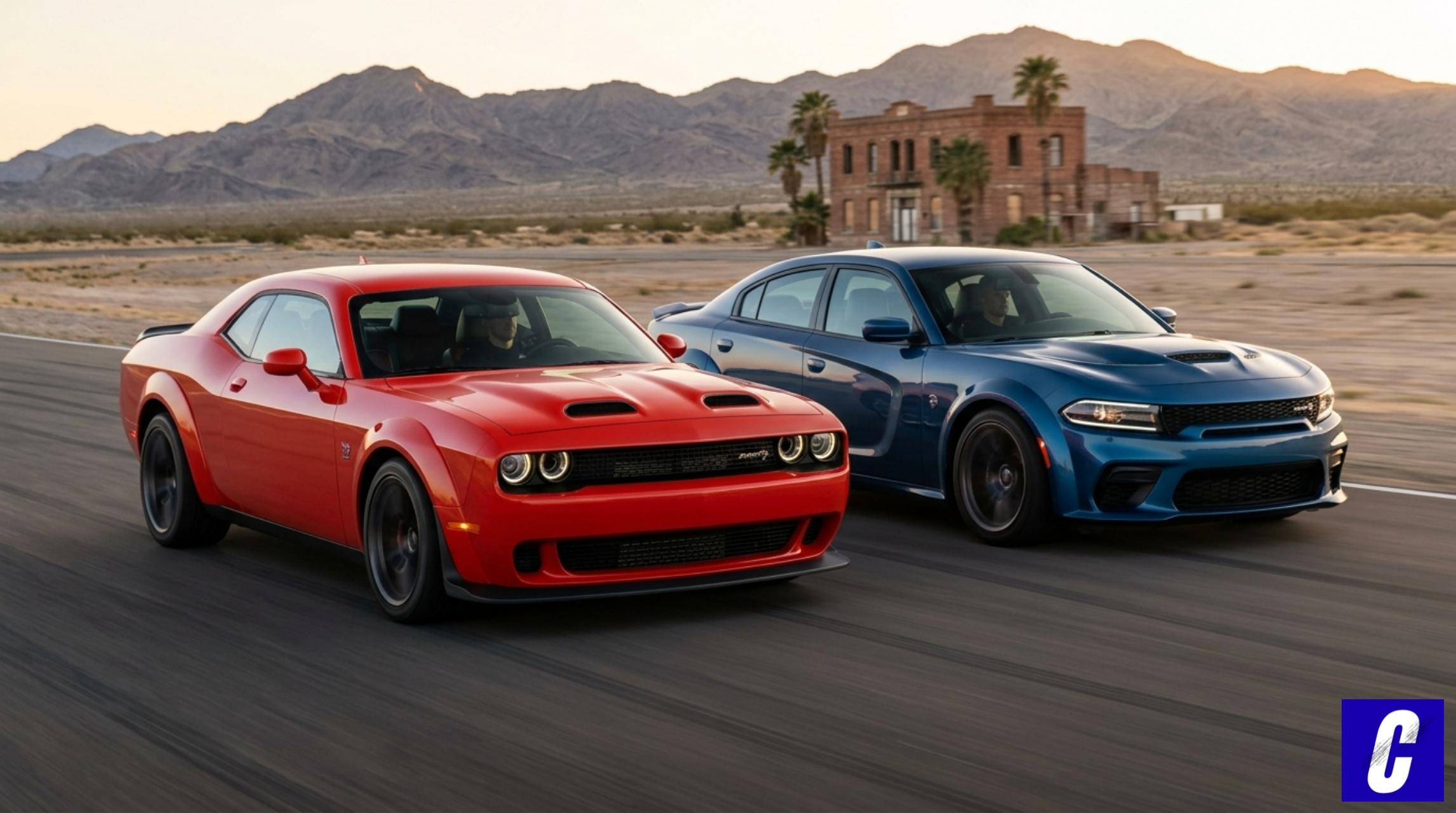
The Dodge Challenger/Charger family offers a range of V-8 muscle cars from “base” HEMI-powered models up to the supercharged SRT Hellcats. In this lineup, the Scat Pack (also sold as the R/T Scat Pack or SRT 392) is the naturally aspirated 6.4-L V-8 variant (485 hp, 475 lb-ft) – essentially the classic HEMI muscle car with Brembos and a stiff suspension. By contrast, the Hellcat and Hellcat Redeye use a 6.2-L supercharged V-8, with 717 hp/650 lb-ft (Hellcat) or 797 hp/707 lb-ft (Redeye). These are built by Dodge’s Street & Racing Technology (SRT) division for maximum performance. In simple terms, Scat Pack = big NA V-8 (good value, classic feel); Hellcat = twin-screw supercharged V-8 (insane power); Redeye = “even more insane” Hellcat variant. Each has trade-offs in cost, fuel use, and drivability. Below we break down the specs, costs, and use cases of each, with data from Dodge/SRT, Car and Driver, Motor Trend, and other sources.
SRT, Hellcat, and Scat Pack Defined
SRT (Street & Racing Technology) is Dodge’s high-performance division, responsible for building the top muscle cars. “SRT” badges are mainly applied to Hellcat and Demon models, but technically Scat Pack models were once branded “SRT 392”.
Scat Pack (R/T Scat Pack / SRT 392): Dodge revived the 1970s Scat Pack name in 2014 for Challenger/Charger models fitted with the naturally aspirated 6.4-L HEMI V-8 (392 cubic inches). This engine makes 485 hp and 475 lb-ft. The Scat Pack sits above the base R/T (5.7L HEMI) in the lineup, adding Brembo brakes, a sport suspension, and wider wheels. It’s essentially an R/T with the “bruising” 6.4-L V-8. Starting price is roughly $39,890 (Challenger R/T Scat Pack, 2015), about half the cost of a Hellcat.
Hellcat (Challenger/Charger SRT Hellcat): Introduced in 2015, the Hellcat variants pack a supercharged 6.2-L HEMI V-8. The base Hellcat (often called “707 hp Hellcat”) makes 707 hp and 650 lb-ft. This monster engine catapults a heavy ~4,500 lb car to 60 mph in about 3.6-3.7 sec. Hellcats are branded “SRT” and cost roughly $65K (new) for Challenger form, or slightly more for Charger. They can be had with a widebody option (very sticky tires) which adds weight and cost.
Hellcat Redeye: A Hellcat with even more boost and cooling, introduced in 2017. The Redeye Challenger/Charger makes 797 hp and 707 lb-ft. It has revised internals and heat exchangers to handle the extra boost. Redeyes do 0-60 around 3.6 sec as well, limited by tire grip more than engine power. Redeyes carry a big price premium (~$80K+ MSRP) and are often called “hedonist’s choice”. Widebody Redeyes (called “Jailbreak” or “Demon 170” variants) push to 807 hp with fancy packages.

Image: Dodge Challenger (Scat Pack or Hellcat) – classic muscle styling with wide fenders. (Source: Dodge/SRT media)
Technical Specifications
The table below summarizes key specs for representative Dodge Challenger/Charger models (Challenger specs used here, but Charger Hellcats are nearly identical). Figures from Car and Driver and MotorTrend tests. (Model years vary slightly; horsepower/torque are peak values).
| Model (2020-2024) | Engine | Horsepower | Torque (lb-ft) | 0-60 mph | Curb Wt (lb) | Transmission |
|---|---|---|---|---|---|---|
| R/T Scat Pack (392)* | 6.4L HEMI NA V-8 | 485 | 475 | 4.2 s | 4261 | 6MT or 8AT |
| SRT Hellcat (707 hp) | 6.2L HEMI SC V-8 | 717 | 650 | 3.6 s | 4488 | 8AT or 6MT |
| SRT Hellcat Redeye | 6.2L HEMI SC V-8 (upgraded) | 797 | 707 | 3.6 s | 4514 | 8AT (mostly) |
The SRT Hellcat Redeye
*The Scat Pack specs (485 hp, 475 lb-ft) are from the Challenger R/T Scat Pack; numbers are from Car and Driver testing. The Hellcat’s 707 hp and 650 lb-ft come from Dodge/Motor Trend data; its 0-60 is ~3.6-3.7 s. The “Curb Wt” entries reflect widebody variants (non-wide Hellcat is ~4488 lb).
Horsepower vs. Cost Chart: The more power you want, the more you pay. The Scat Pack (485 hp) starts around $50K. The Hellcat (~700 hp) starts ~$65K, and the Redeye (~800 hp) ~$80K. (Costs depend on model year and options).
Power Delivery: All three are rear-drive. The Scat Pack’s 6.4L HEMI is naturally aspirated – it delivers strong low-end thrust (classic V-8 rumble) without lag. The Hellcat’s 6.2L is twin-screw supercharged, giving huge torque immediately. Both cars can be optioned with a ZF 8-speed automatic (paddles) or a 6-speed manual; automatics can shift in ~160 ms.
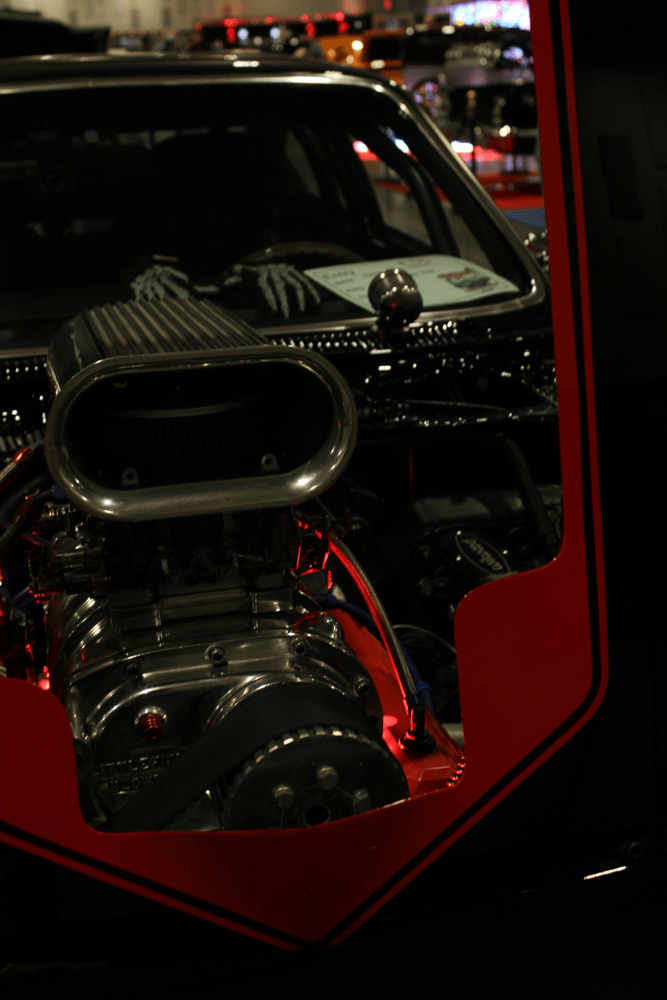
Image: Supercharged Hellcat engine. The Hellcat’s 6.2L HEMI uses a twin-screw supercharger for its 717–797 hp. (Source: Dodge/SRT or Car and Driver media)
Ownership Costs (Estimated)
High power comes at high cost. A rough 5-year ownership comparison (based on Edmunds data) shows:
- Fuel Economy: Expect low teens mpg. The Hellcat has EPA ~13 mpg city/22 mpg highway (16 mpg combined), the Redeye similar. The Scat Pack is a bit better – around 15-16 mpg combined – due to no supercharger. Annual fuel cost (15k mi/yr) is roughly $3,000-4,000 for any of these (premium gas).
- Insurance: Very high. Edmunds lists ~ $6.3K/5yr (about $1.25K/yr) for Scat Pack vs ~ $8.4K/5yr ($1.7K/yr) for Hellcat variants. Super-high limits, low mileage, and performance pedigree push rates up. Expect at least $1-2K per year for typical profiles.
- Tires: Widebody Hellcats use 305 mm rear tires (around $400-$500 each street tire); Scat Pack uses 275 mm (around $300 each). Frequent launch/burnout enthusiasts will need new tires every few thousand miles. Budget $1-2K per year on tires for hard use (less if careful).
- Maintenance/Repairs: Annual maintenance (oil, etc.) is similar: about $500-$800/yr typical, plus brake pads (big Brembo pads are -$300/axle) and fluid changes. The Hellcat’s extra supercharger and cooling hardware add complexity. Edmunds shows slightly higher maintenance costs on Hellcats in early years. Routine reliability is typical for modern Mopars – generally solid engine durability but known issues like timing chain stretch on early HEMI motors (mostly solved in newer ones). The supercharger itself has a life-cycle but is robust. Overall expect $800-$1,500/yr on maintenance/repairs.
- Depreciation: All muscle cars depreciate, but Hellcats hold surprisingly decent value for their power (they cost so much new). A 5-year TCO® from Edmunds: $59K for a Scat Pack (base) vs ~ $64K for Hellcat Widebody vs $68K for Hellcat Redeye (these totals include purchase price). Hagerty reports that early Hellcats have lost about 10% of their value in 5-6 years — heavy depreciation initially, then value stabilizes. Scat Packs start cheaper and drop less in dollars, but they also command a premium nowadays since Dodge discontinued some V8s. In summary, resale value trends roughly scale with nameplate and condition: Hellcats start high and fall back to “normal” levels; Scat Packs tend to be steadier bargains.
Driving Impressions and Use-Cases
Scat Pack (6.4L NA): The Scat Pack Challenger/Charger feels like an old-school muscle car on steroids. It launches strongly (0-60 in 4.2 s) with thunderous V-8 sound, though wheelspin is common in first gear. In the hands of amateurs, it’s eager but forgiving; it’s heavy (~4260 lb) yet surprisingly agile for its size. Car and Driver calls it “a very fast and charismatic muscle car”. The ride is stiff (performance suspension and wide wheels), so it’s rougher than base models, but still tolerable as a daily driver. The manual’s throttle blip and rowdy exhaust make it fun to heel-and-toe on twisty roads, while the automatic has lightning shifts. Recommended for someone who wants authentic V-8 thrust and brake-snarl at half the cost (and complexity) of a Hellcat.
Hellcat (707 hp): Driving a Hellcat is an assault on the senses. Body roll is well-contained by adaptive Bilstein shocks, but the real story is power. Even the brakes can’t keep you out of trouble: as Motor Trend notes, “roll out and then stand on it… you’re still shoved deep into the seatback”. In practice, launching a Hellcat at a stoplight requires finesse: the rear 275 Pirellis easily smoke, so drivers often pre-charge the supercharger with a two-step launch control or start in second gear. Once rolling, the torque is “deep and wide enough to reach the horizon”. The car’s weight (~4488 lb) and 3.5-inch wider body (widebody chassis) are mitigated by big brakes (stop from 70 mph in 154 ft) and slick tires. The result is shockingly fast: ~3.6 s to 60, 11.2 s quarter (per Dodge’s NHRA-optimized runs). Handling is neutral but not precisely quick (light, quick rack steering). Road NVH is actually low inside – you cruise in comfort until you slam the loud pedal. In everyday driving, the Hellcat is surprisingly tractable: it idles quietly, parks like a normal car, and has power modes (Sport/Track) to calm the throttle if desired. But at the track or drag strip, it is a wake-up call – it will embarrass almost every other sedan or coupe on earth. It’s best for buyers who live for maximum straight-line performance, launch control antics, and big-burnout thrills.
Hellcat Redeye: A “Hellcat on steroids.” The Redeye drives almost the same as the 717-hp Hellcat, just faster. It has firmer suspension (especially in Jailbreak or Demon models) and bigger coolers. The throttle response feels the same, but the acceleration is slightly stronger: Dodge claims 0-60 still around 3.5-3.6 s. In normal driving, you likely won’t notice everyday differences except more intentional stance and price. It excels on the drag strip or road course with more margin (and requires even stickier tires to exploit fully). Driver’s impressions say “extra horsepower is addicting but rarely needed on the street.” In short, go Redeye if you want the ultimate bragging-rights machine (and have deep pockets for gas/tires).
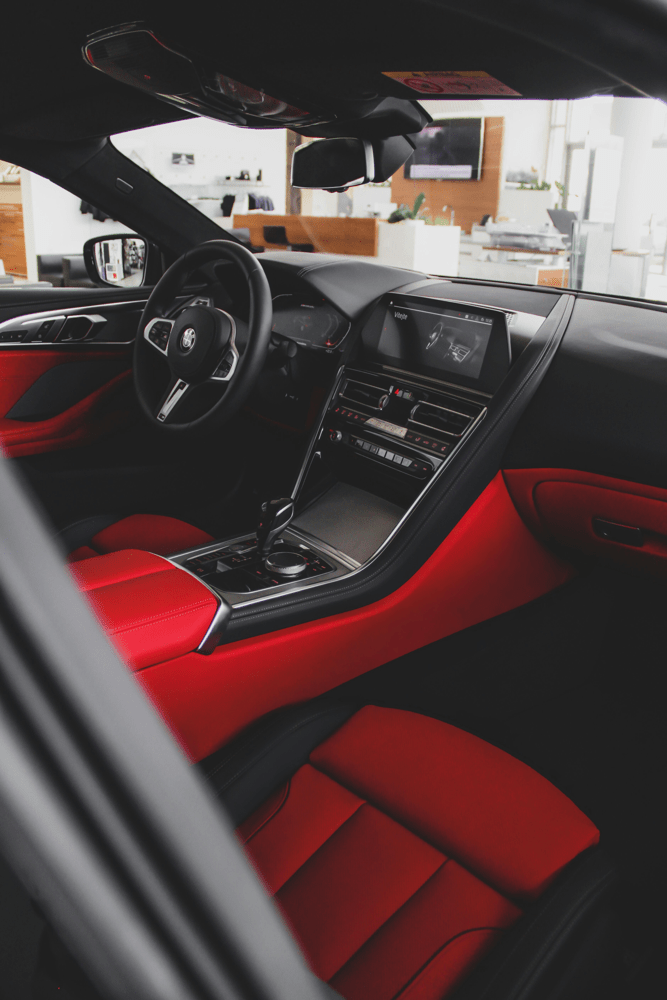
Image: Sporty muscle car interior (example; Challenger interiors are broadly similar). The Hellcat/Scat Pack cabin has a retro-inspired layout with performance seats, but real-world comfort (roominess, features) is similar across trims
Resale Value & Reliability Trends
Over the years, muscle car resale values have fluctuated. Hellcat models, despite their huge MSRP, tend to depreciate heavily in dollar terms during the first few years, then stabilize. For example, Hagerty reports that 2015-2018 Hellcats (Challenger/Charger) have lost around 10% value since new. This is in part because the new-car hype was so high that many buyers paid premium, and a 50-60% markup over MSRP isn’t unheard of on late models. Scat Packs, starting much cheaper, depreciate more linearly. A C/D reviewer notes the Scat Pack is a “huge pony-per-dollar proposition” — you get nearly Hellcat-like power at roughly half the price, so used Scat Packs can be strong values. Today, used Scat Packs (2020+) often sell in the $40-50K range; used Hellcats (707 hp) about $50-60K; and Redeyes around $65-70K, depending on options.
Reliability is typical American V-8 sedan territory: generally robust, but not flawless. The 6.4L HEMI (Scat Pack) is a long-running engine with good durability and tends to be very reliable if oil/filters are changed regularly. The Hellcat’s supercharged 6.2L is also mechanically sound, but has more wear items (the supercharger belt and bearings, a more aggressive cooling system, etc.). Buyer reports note that defects are rare, though some first-year Hellcats had issues like water pump leaks or transmission quirks. Overall, expect lower reliability than a Toyota, but similar to any modern high-performance sedan. Regular maintenance is a must. Dodge provides a 5-year/100k limited warranty (for new cars) that covers major powertrain issues. A long-term reliability study is not available yet for 2020+ Hellcats, but no widespread chronic problems are widely reported – in part because these cars are often driven hard by enthusiasts.
Who Should Buy Which?
Recommended for Scat Pack: Enthusiasts who want classic V8 muscle on a budget. The Scat Pack delivers most of the fun (brute torque, 20-inch wheels, Brembos) for significantly less money and complexity. It still hits 60 mph in the low 4s and sounds the part, while offering slightly better fuel economy (-15-16 mpg combined) and ~$10-15K lower MSRP. Ideal as a daily-driver muscle car that you can still occasionally “open up” hard.
Recommended for Hellcat: Gearheads who live for maximum straight-line speed and have the wallet to match. If your priority is utter acceleration (drag racing, donuts, etc.), and fuel economy/range doesn’t matter, the Hellcat is for you. It’s also a decent daily car (you can keep a Hellcat in Comfort mode for commuting), but its strengths come alive at the strip or canyon road. It’s best bought new or lightly used, since there are few compromises compared to lesser models.
Recommended for Redeye: Ultra-wealthy muscle aficionados and collectors. There are few practical reasons to choose Redeye over Hellcat except bragging rights and one-upmanship. It’s for someone who wants literally the most powerful factory muscle car at the cost of $80K+. Even a used Redeye is an investment; expect the combined fueling/tires/insurance to dwarf upkeep of lesser cars. Buyers often cross-shop it with exotics and expect it to perform like one in a straight line.
Usage Scenarios: All three cars thrive at drag strips, high-speed runs, and showing off. The Scat Pack can pull double-duty as a relatively civil cruiser, while any Hellcat will gleefully melt rubber on demand. None are optimal for tight autocross or dense city traffic (heavy weight, wide turn radius), but all can handle basic daily driving. The Charger variants of these trims add more rear seat space/four doors (Hellcat Sedan is the fastest four-door on sale) which could matter for the buyer needing more practicality.
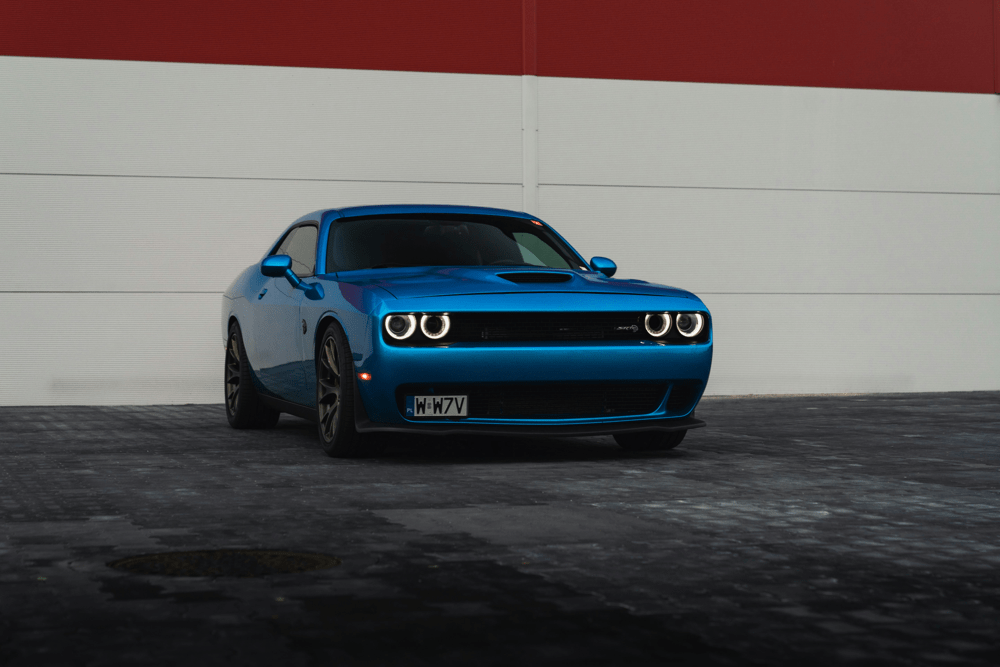
Image: Dodge Challenger Hellcat Redeye (blue). These supercharged HEMI models come in wild colors and widebody kits. (Source: Dodge/SRT official media)
Comparison Summary
In short: the Scat Pack gives you a big HEMI V8 with Brembo brakes and minimal compromise – it’s the best “bang for your buck” in raw muscle and everyday use. The Hellcat shoots up to the next power tier with a supercharger and is more of a thrill machine, at the cost of higher fuel/insurance and more demanding drive manners. The Redeye is essentially a Hellcat on steroids, only for those who want “the most” and can swallow the extreme costs. The technical specs and ownership tables above quantify these differences; real-world reviews emphasize how the extra horsepower feels – from the approachable grunt of the 485 hp Scat, to the mind-bending kick of the 707/797 hp supercharged beasts.
Sources: Official Dodge/SRT specifications and press releases, Edmunds true-cost estimates, Car and Driver tests, Motor Trend, and others.
YouTube References
The following videos demonstrate these cars in action and provide first-hand comparisons:
- Wheels – “Challenger Hellcat vs Scat Pack drag racing”
Quarter-mile drag races comparing a Hellcat and a Scat Pack Challenger (shows launches, traps). (Fast cuts at 0:00-2:20).
- Redline Reviews – “2020 Charger Scat Pack Widebody vs Hellcat”
In-depth two-car review: performance tests (0-60, braking) and practical pros/cons of the 485 hp Scat Pack Widebody vs Hellcat (gas, comfort).
- Dodge (Mopar) – “Challenger Hellcat vs Scat Pack – What’s the Difference?”
Official Mopar Expert video (Alejandro) explaining the feature differences between Challenger Scat Pack and Hellcat models (engine bays, badges, price).
- Jay Leno’s Garage – “2015 Dodge Challenger SRT Hellcat”
Jay Leno’s review of a Hellcat: includes exhaust note demo and big burnout (see ~3:30 for burnout).