NOTE: This is an opinion article based on publicly available reporting and legal developments. It refers to disputed allegations and reported legal action that should ultimately be tested in court.
Democracy Is Not Measured by Applause
Many of the BJP’s most loyal supporters will dismiss every criticism as “agenda.” But that reaction misses the real issue. The question is not whether the government likes criticism. The question is whether citizens, creators, journalists and activists can still afford to make it.
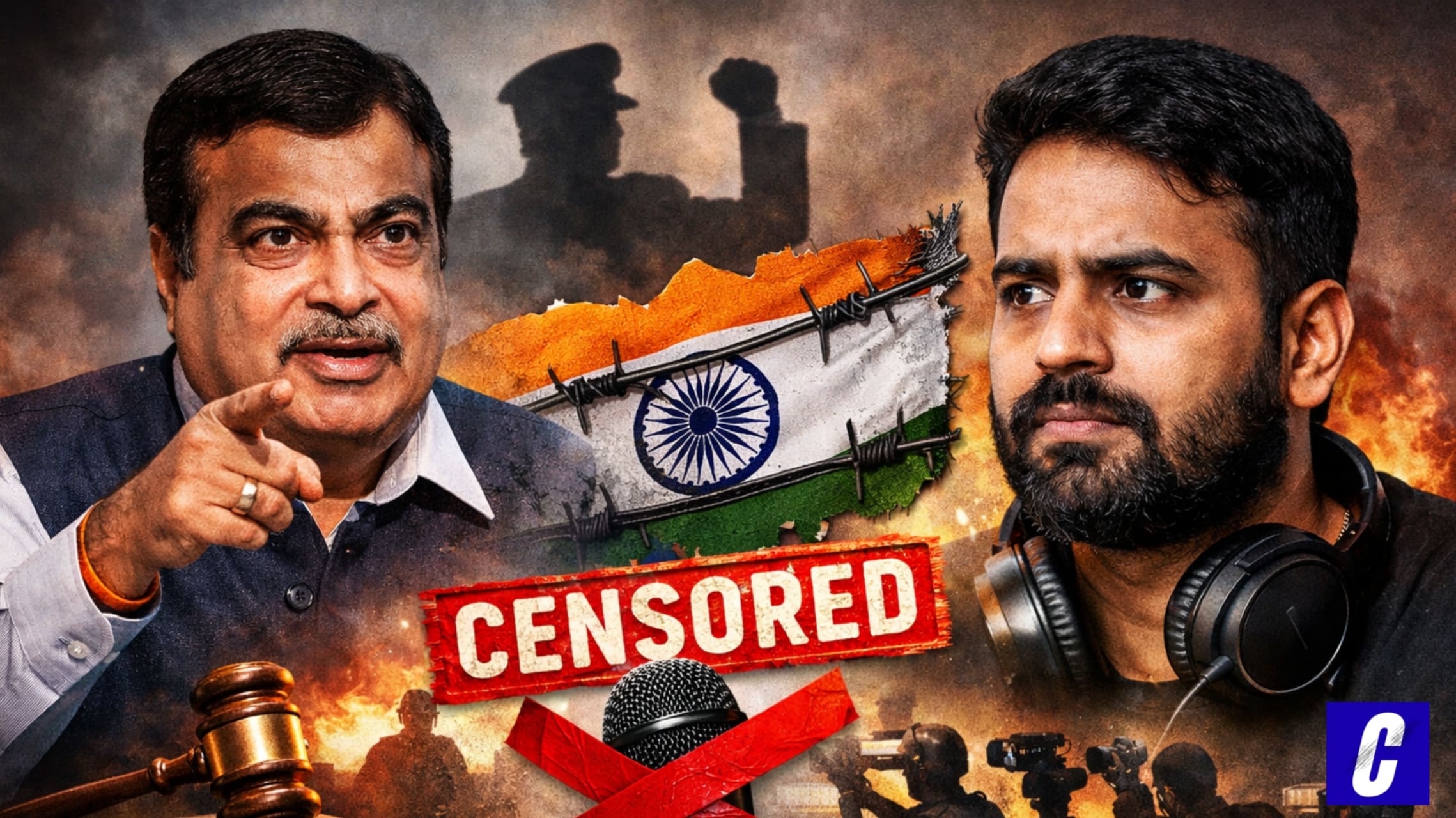
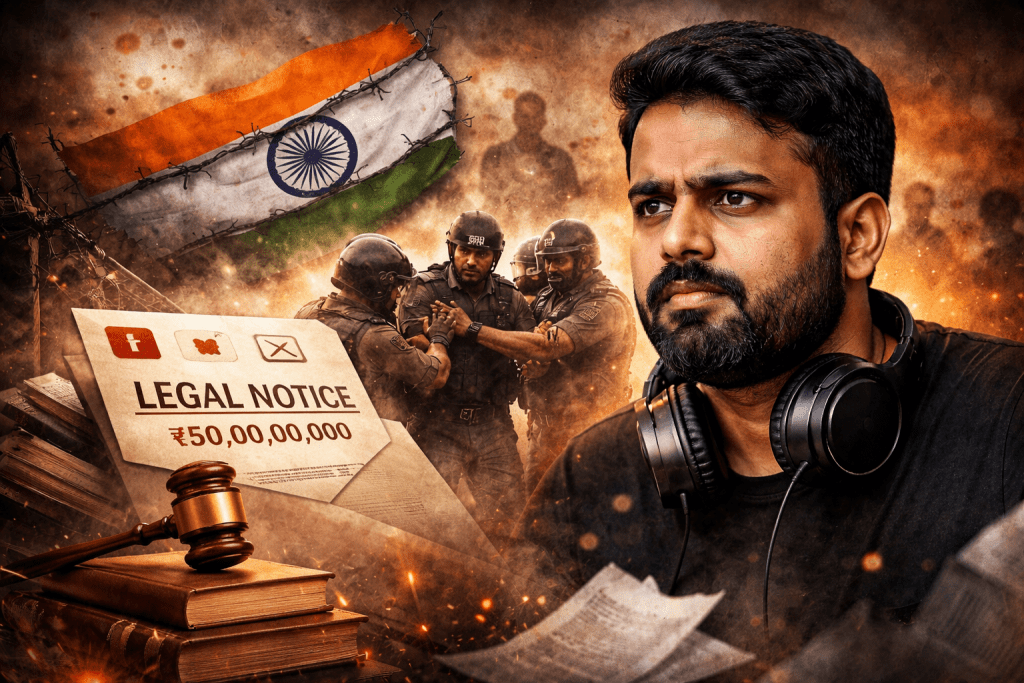
A democracy does not die only when elections stop. It begins to weaken when ordinary people learn that speaking up can cost them their livelihood, their peace, their platform, or years of legal harassment. That is why the controversy around content creator Mukesh Mohan matters. According to reporting that cites Mohan’s own public statements, he said he was hit with a ₹50 crore defamation notice and pulled into police proceedings after making a video based on a Caravan investigation. The public official at the center of the row, Nitin Gadkari, is not a marginal figure; he is the Union Minister for Road Transport and Highways.
The Constitution Is Clear, Even If Power Is Not
India’s constitutional position is not mysterious. Article 19(1)(a) guarantees freedom of speech and expression. Article 19(2) allows reasonable restrictions, including for public order and defamation. Section 69A of the Information Technology Act gives the government power to block public access to online information, but only on specified grounds and through a legal framework. And in Shreya Singhal, the Supreme Court drew the line that should guide every government in a democracy: mere discussion or even advocacy, however unpopular, is protected; only when speech reaches the level of incitement does the state get to step in.
That principle matters because criticism of the powerful is not some side activity in a democracy. It is the core of it.
Why the Mukesh Mohan Dispute Matters
The Caravan report by Kaushal Shroff described a 2022 seizure of 28 tonnes of meat on the Pune–Mumbai Expressway, Rembal Agro and Foods’ claim that the consignment was buffalo meat meant for export, and a magistrate’s doubts about the paperwork placed before the court. Mohan’s video reportedly summarized that published investigation and the questions it raised about alleged links between Rembal Agro and businesses connected to Gadkari’s family. Whether every allegation in that chain is ultimately proved or disproved is for due process and the courts. But the democratic question is different: what message does a ₹50 crore legal threat send when it is aimed at an individual creator with a far smaller platform and far fewer resources than a cabinet minister?
The fastest way to silence speech is not always to ban it. Sometimes it is enough to make it unaffordable.
And that is exactly why this case has resonated so strongly. Even when the legal merits are still contested, the political meaning is obvious. Fear travels faster than a judgment.
The Chilling Effect Is the Point
There is a name for this pattern: a SLAPP, or a strategic lawsuit against public participation. The goal is not only to win a case. The goal is to burden criticism with so much cost, stress and uncertainty that others decide silence is cheaper. An Oxford Human Rights Hub analysis on Indian law notes that civil defamation backed by the threat of heavy damages and pre-trial restraints is the most common path for SLAPP-style pressure. A Columbia Global Freedom of Expression factsheet similarly defines SLAPPs as lawsuits intended to censor, intimidate and silence critics by making legal defense itself the punishment.
That is what makes the Mohan episode bigger than one man, one video or one notice. It reads like a message to everyone else: criticize at your own risk.
The Pattern Is Bigger Than One Case
This is not paranoia. In May 2025, Columbia Law School’s Human Rights Institute, together with TrialWatch and NLU Delhi, said it had examined more than 400 criminal cases initiated against journalists in India between 2012 and 2022. It found that scrutiny of public officials was the single most common reason journalists were charged, with 147 documented incidents linked to reporting on government actors and authorities. The report also warned that most of these prosecutions did not end in convictions or full trials, suggesting that the process itself often functions as punishment.
Reporters Without Borders painted a similarly disturbing picture in 2025. RSF ranked India 151st out of 180 countries in its World Press Freedom Index and called for abusive legal proceedings against journalists to be dropped. It also warned about arrests, raids, legal harassment and growing barriers to independent reporting.
So when critics say free speech is being strangled, they are not inventing a problem from thin air. They are pointing to a pattern.
Digital Censorship Is No Longer Theoretical
The online sphere tells the same story. In May 2025, X said it blocked more than 8,000 accounts in India after government orders that, according to the company, carried the threat of fines and possible imprisonment for local staff. In July 2025, X said the government had ordered the blocking of 2,355 accounts under Section 69A, including Reuters and Reuters World; the government disputed aspects of that episode, and Reuters’ access was later restored.
The broader fight over takedown power is still alive. X challenged the government’s Sahyog portal as an unauthorized censorship mechanism that bypassed Section 69A safeguards. A Karnataka High Court ruling upheld the portal and the government’s use of Section 79(3)(b), but by March 2026 the matter was still continuing on appeal, with the High Court seeking the Centre’s response.
This is why people worry when they hear that accounts are withheld, content disappears, or platforms quietly comply. The concern is not only that speech is being removed. The concern is that the rules, safeguards and lines of accountability become harder and harder for the public to see.
The Media Question Cannot Be Ignored
Critics often say the media has been “bought.” The more defensible way to say it is this: India’s information ecosystem has long been vulnerable to concentrated ownership, political proximity and advertising dependence. A Reuters Institute summary of India’s 2025 media landscape noted that media pluralism is challenged by economic pressure, increasing corporate ownership and their connections with political power. An RSF-backed Media Ownership Monitor had already warned that owners with direct or indirect political links control a sizeable share of audience attention and that dependence on government advertising can create strong “soft pressure” on coverage.
So no, the problem is not only a loud TV anchor or a single propaganda video. The problem is a system in which political power, media influence, digital takedown tools and ruinous legal threats can begin to reinforce one another.
Free Speech Dies When Fear Becomes Normal
None of this means public figures lose the right to defend their reputation. They do have that right. But in a democracy, that right must be balanced against the public’s right to question power, examine possible conflicts of interest, debate policy and repeat already published reporting without being crushed by disproportionate retaliation.
Criticism is not sedition. Scrutiny is not sabotage. Dissent is not anti-national.
The moment citizens begin calculating not whether they are telling the truth, but whether they can survive the consequences of saying it, freedom of speech has already been wounded.
What Must Change
India does not need more speeches about democracy. It needs democratic safeguards: transparent takedown processes, far greater judicial caution before speech-suppressing orders are granted, real protection against SLAPP-style intimidation, and a political culture mature enough to answer criticism with facts instead of fear. Reporters Without Borders has already urged India to adopt anti-SLAPP legislation. That demand looks more urgent with every such controversy.
The heart of free speech is not praise. It is dissent.
And when dissent becomes punishable by ruin, what dies first is not a YouTube channel, an X account or one critic’s courage.
What dies first is democracy’s nerve.
References & Sources
- Constitution of India – Article 19 (Freedom of Speech and Expression)
https://www.indiacode.nic.in/bitstream/123456789/19150/1/constitution_of_india.pdf - The Caravan (Kaushal Shroff) – Investigation on Rembal Agro and Gadkari-linked businesses
https://caravanmagazine.in/business/nikhil-nitin-gadkari-beef-rembal-cian - Reporters Without Borders (RSF) – Press Freedom in India
https://rsf.org/en/india-rsf-calls-press-freedom-world-s-largest-democracy - Columbia Human Rights Institute (2025)
Systemic Use of Criminal Law Against Journalists in India
https://hri.law.columbia.edu/new-report-reveals-systemic-use-criminal-law-target-journalists-across-states-india - Economic Times – X Blocking Accounts in India Under Government Orders
https://economictimes.indiatimes.com/tech/technology/x-blocks-8000-accounts-in-india
Related Posts
If you found this article important, you may also like:
- AI in Newsrooms: How Artificial Intelligence Is Reshaping Journalism, Jobs, and Trust
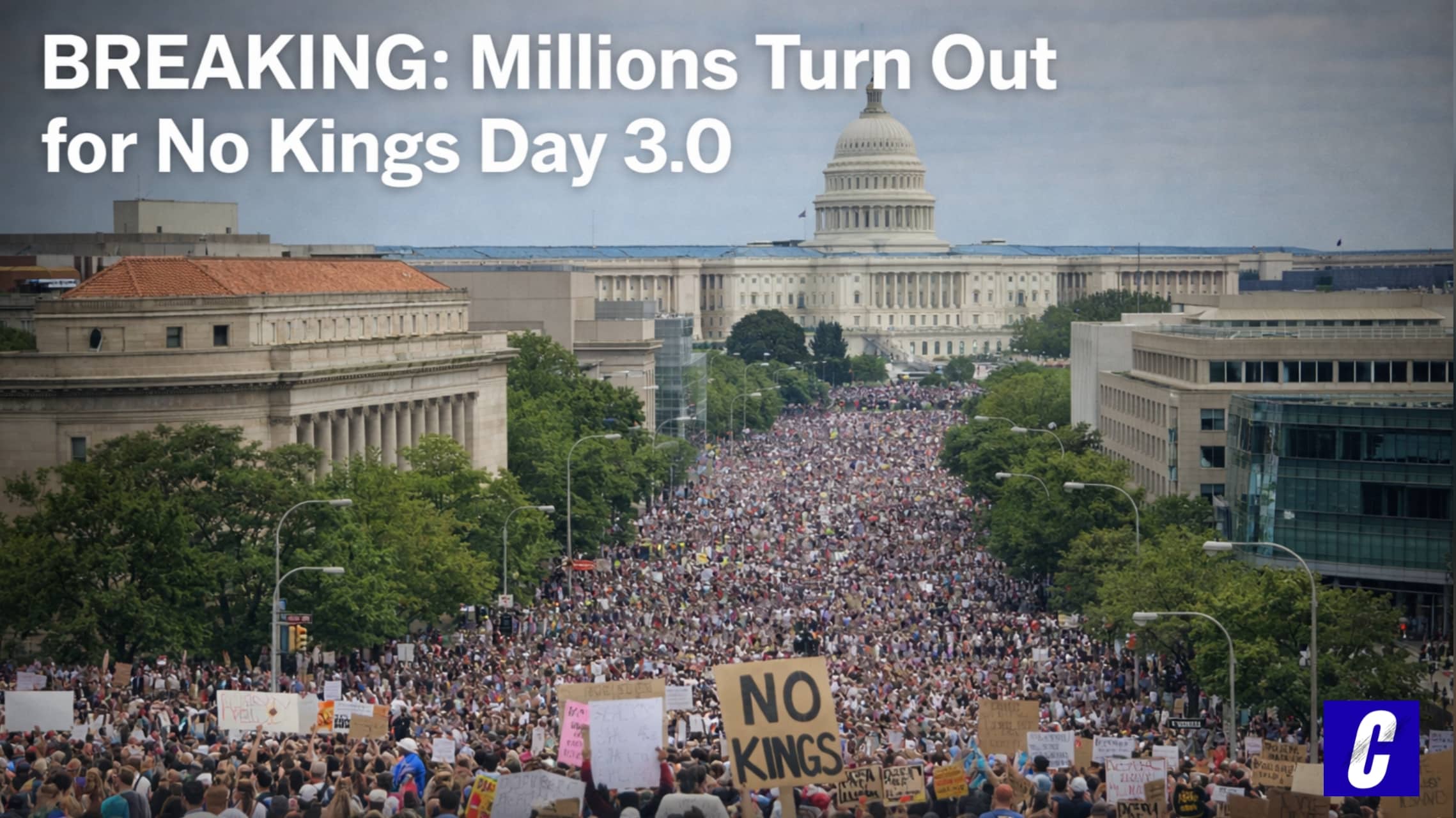
- No Kings Day 3.0: Millions Rally Nationwide as Senate Republicans Eye a Tightening Map and U.S. Probes Russia–Iran Intelligence Claims
- Now You Can “Jailbreak” Any AI? The Rise of Obliterators and the Fight Over AI Safety