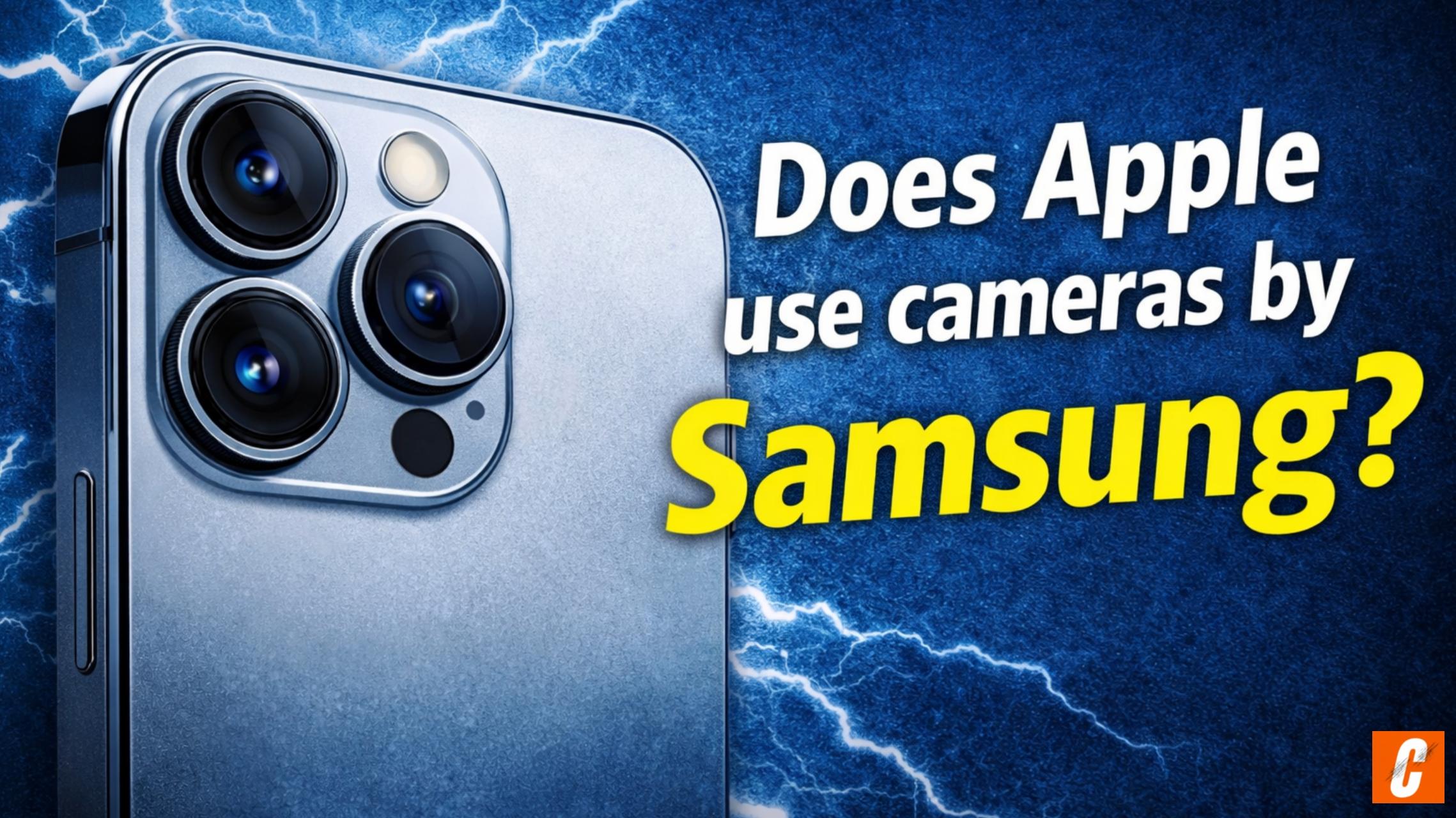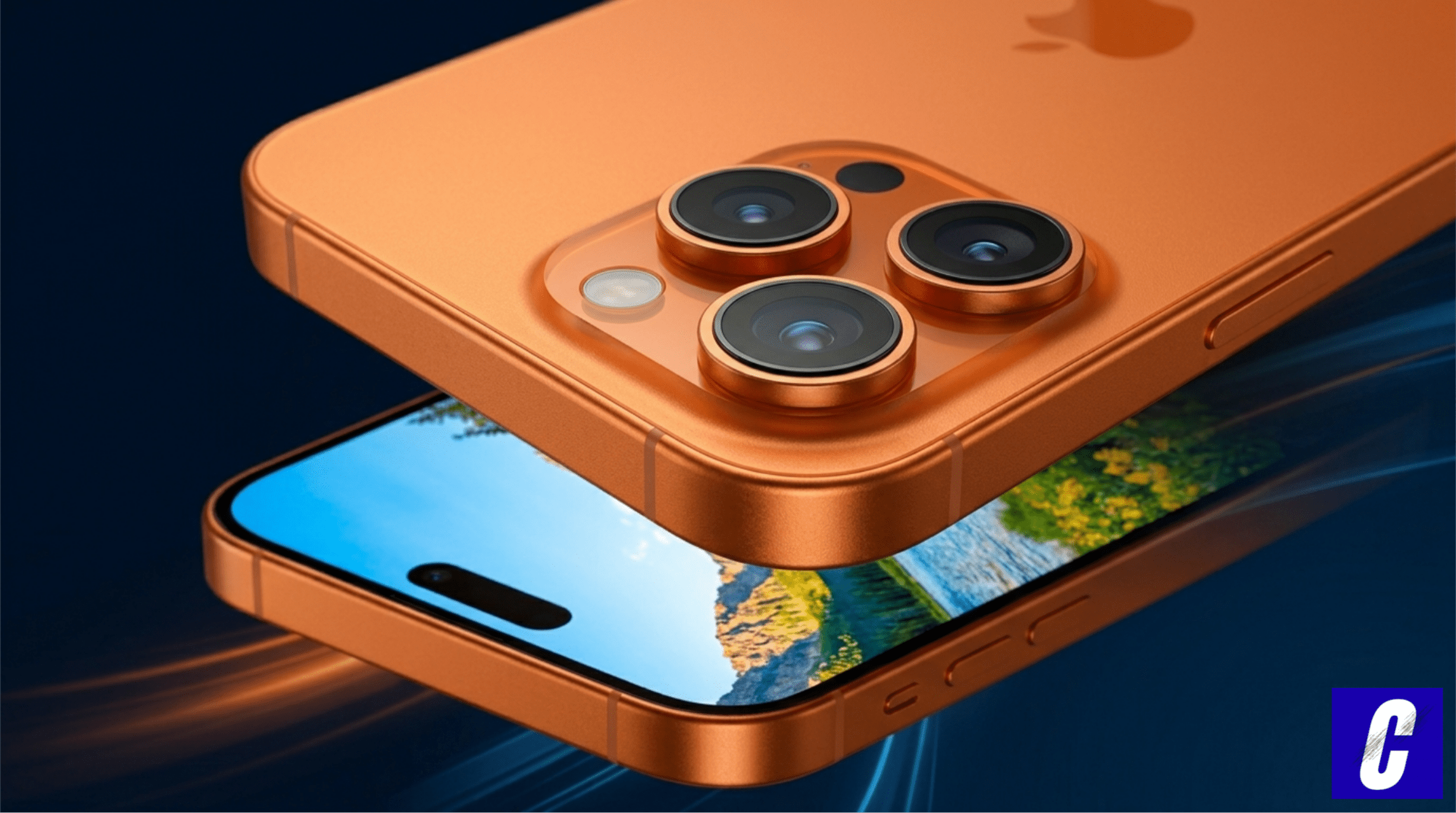
iPhone 17 Pro Max (2025) Overview
Apple’s iPhone 17 Pro Max (announced Sept 9, 2025) is Apple’s largest, most powerful iPhone yet. It features a bold new design with a cosmic orange finish (among three colors) and an all-aluminum “unibody” chassis for improved heat dissipation. Key upgrades include a new A19 Pro chip (with 6‑core CPU, 6‑core GPU, 16-core Neural Engine), a 48MP Fusion triple-camera system (with 8x optical-quality telephoto zoom), and the longest battery life of any iPhone (up to 39h video playback). The 6.9‑inch OLED ProMotion display now reaches 3000 nits peak brightness outdoors, and the new Ceramic Shield 2 coating promises 3x better scratch resistance.
Key Specs (iPhone 17 Pro Max): 6.9″ OLED (2868×1320, 460 ppi, 120 Hz); A19 Pro chip; 12 GB RAM; storage 256 GB–2 TB; 48 MP (f/1.78) main + 48 MP (f/2.8) tele + 48 MP (f/2.2) ultrawide rear cameras with 8x optical-equivalent zoom; 18 MP Front Center Stage camera; IP68 water resistance; weight 233 g.
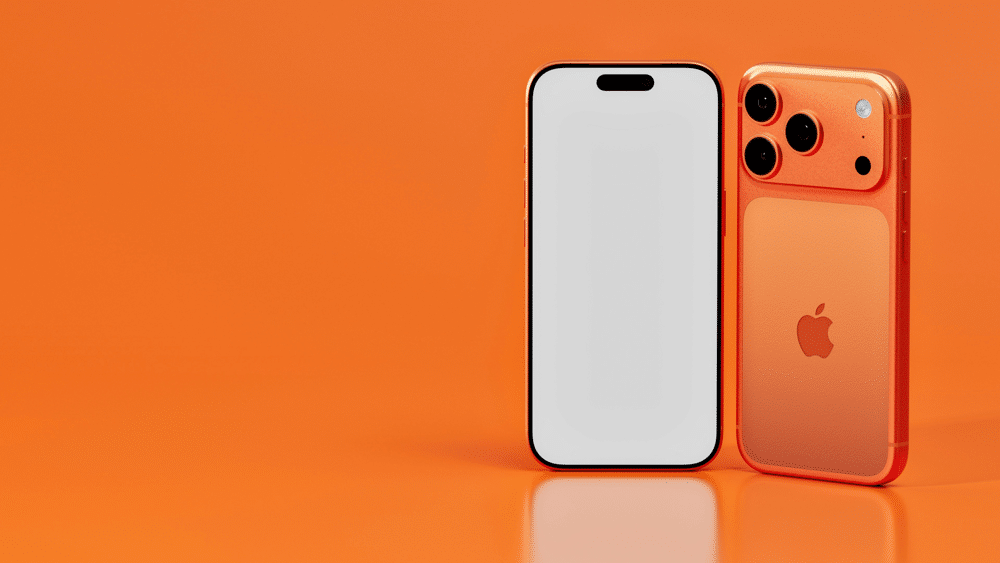
Figure: The iPhone 17 Pro Max in Cosmic Orange. This anodized aluminum finish is highly vivid. The new aluminum unibody is lighter than last year’s stainless/titanium frame but “feels thicker”(Image Source)
Design and Display
The 17 Pro Max revises the iPhone design subtly. It sports a heat-forged aluminum unibody, which Apple says is lighter and conducts heat better for sustained performance. Users report it feels slightly thicker than the 16 Pro Max but no heavier. The polished camera bar now spans the entire back, reducing the wobble of the phone on a table. The edge and back are flat, and the notch is replaced by a smaller Dynamic Island. Bezels remain similar to the 16 Pro Max.
The Super Retina XDR display is 6.9″ OLED (2868×1320, 460 ppi) with ProMotion (up to 120 Hz). Peak brightness is a record 3000 nits for outdoor use (1600 nits HDR), making it extremely legible in sun. Compared to Android rivals, the iPhone’s resolution is lower (for example, Pixel 8 Pro is 2992×1344), but Apple prioritizes color accuracy and power efficiency.
- Pros: Apple claims “best display” (higher brightness, anti-reflective). Reviewers note the design is “fresh and divisive” (vibrant colors like Cosmic Orange). Despite the big battery, the 17 Pro Max is actually lighter than Samsung’s Galaxy S26 Ultra (233 g vs ~228 g) and similar thickness (8.75 mm).
- Cons: The aluminum frame feels “cheaper” to some users compared to stainless steel. There’s no black color – Silver looks plain, and one user said the Silver model “looks very cheap”. The device is still thick and heavy (233 g), making it bulky in pockets. Compared to Pixel 8 Pro (213 g) and S26 (167 g), it’s heftier. Some consider the design a minor evolution, calling it only a “5% better experience” than an iPhone 13 Pro Max.
Performance and Battery
The A19 Pro chip (built on a next-gen 3nm process) provides “stellar” performance and advanced on-device AI capabilities. In benchmarks, it outpaces last year’s A18 by ~30-40% and easily matches or exceeds rivals. Reviews praise “rock-solid sustained performance” thanks to a vapor-chamber cooling system. Tom’s Guide notes “better sustained performance (thanks to vapor chamber cooling)”, and TechRadar awarded it a 5/5 performance score.
Importantly, Apple optimized the 17 Pro Max for battery life: the larger chassis accommodates a much bigger battery (about 4800–5100 mAh per teardown estimates). Officially, Apple claims up to 39 hours video playback – the longest ever in an iPhone. In practice, reviewers and users rave: Tom’s Guide calls it “the longest iPhone battery life ever”. On Reddit, users report 7–11 hours of screen-on time with half battery remaining in typical use. One user exclaimed “Best battery life in any phone I’ve ever owned.”.
The iPhone supports fast charging via USB-C (50% in ~20 min with a 40W adapter) and 15W MagSafe wireless charging. It also gains MagSafe Battery Pack support. However, compared to some Chinese Android phones (50W or faster charging), speeds remain modest. Still, the 17 Pro Max easily outlasts the Samsung S26 (4300 mAh) and Pixel 8 Pro (5050 mAh) in real-world use.
Cameras
Apple overhauled the cameras: all three rear lenses now use 48 MP sensors. There’s a 24 mm f/1.78 “Fusion Main” wide camera, a 13 mm f/2.2 Ultra Wide, and a 100 mm f/2.8 periscope Telephoto (4× optical, 48 MP) plus an 8× computational telephoto (200 mm equivalent). These support 16× total zoom and 40× digital. A16UX chip-style optics and computational photography (Deep Fusion, Smart HDR5, Photonic Engine) are improved.
The new 18 MP front camera now uses Center Stage tracking for group selfies and video calls. Reviewers call the camera “impressive”. Low-light and HDR performance are best-in-class, and the 48 MP sensors offer extra detail or ProRAW flexibility. 8× zoom is now possible, twice beyond last year. According to TechRadar and Tom’s Guide, image quality is “superb” for photos and video. (One user noted zoom images still “grainy when zooming in”, hinting at some room for improvement.)

Figure: Sample photo taken with the iPhone 17 Pro Max’s 8× telephoto lens (from Jerad Hill’s review gallery. Detail and dynamic range are excellent for such a zoom shot. [Image Source]
- Pros: Excellent image quality in daylight and night (thanks to Photonic Engine). True 8× optical-equivalent zoom. Sharp 48 MP main and ultrawide. Center Stage front camera adds flexibility. Apple’s video modes (Dolby Vision, 4K/60fps) remain top-tier.
- Cons: Pixel and Samsung still match or slightly beat it in computational photography (night scenes, AI features). Tom’s Guide notes the iPhone is “behind on AI” compared to competitors (no on-device Genmoji or advanced voice features yet). The lack of a black color disappoints some. And the sheer camera bump may be unwieldy (though improved by the full-width bar). Some Android rivals like the Galaxy S26 Ultra offer higher-res zoom (100×) or 1″ sensors, but in real use Apple’s output is very strong.
Software (iOS 26)
Running iOS 26 (released with the 17 lineup), the 17 Pro Max gains new Apple Intelligence features. This includes AI-powered photo editing (Advanced Redefinition of subjects), on-device Siri improvements, and new app enhancements. iOS 26 added features like live translation, video podcasting, and enhanced Apple Music (Playlist Playground). Users can expect the latest security updates and features; for example, iOS 26.4 (Mar 24, 2026) introduced offline song recognition and other tweaks. Apple will likely continue support for several years.
Pros and Cons (Summary)
- Strengths: Industry-leading battery life; blazing A19 Pro performance; superb camera versatility (all 48MP, 8× zoom); super-bright 6.9″ OLED display; creative new colors; improved durability (Ceramic Shield 2). Users and reviewers agree it’s “one of the best big-screen phones” available, especially for power users who prioritize battery and camera.
- Weaknesses: Heavy/thick form factor (233 g); high price (≥USD $1199 for 256GB); design has mixed reception (aluminum frame feels less premium, no black finish). Screen resolution and features lag behind top Android (no 4K display, no under-screen Touch ID). Limited new “wow” features beyond hardware bump – some think it’s only a modest upgrade over iPhone 15/16 Pro Max.
Professional Reviews
Professional reviewers generally rate the 17 Pro Max very highly. TechRadar calls it the “apex iPhone” with “best battery life ever” and “one of the best smartphones you can buy”. Tom’s Guide gave it an Editor’s Choice and notes its “stellar” status: “easily one of the best big-screen phones yet,” praising the cooling, battery and zoom camera. The Verge’s first-look praised the new design (wider camera bar, vibrant colors) and mentioned “wobbliness” is greatly reduced.
In aggregate, reviews highlight performance and battery as the strongest points. All agree the A19 Pro chip and vapor chamber allow unmatched sustained speed. The camera set-up is also widely praised; reviewers like TechRadar and Tom’s mention the vastly improved telephoto (8×) and detail. Screen brightness and durability also get nods. Criticisms in reviews echo users: it’s thick/heavy, and Apple’s software is only a slight jump (Verge calls it a “basic upgrade” except for internals).
Compared to Samsung Galaxy S26 and Pixel 8 Pro (see spec table below), the 17 Pro Max often wins on battery life and raw performance. The S26 has similar display tech but a smaller battery (4300 mAh) and Pixel 8 Pro has a bigger battery (5050 mAh) but lower brightness. The S26 (6.3″ FHD) and Pixel (6.7″ QHD) have higher-res screens, but the iPhone’s screen is extremely bright and color-accurate. In cameras, Pixel 8 Pro’s triple camera (50+48+48 MP with 5× tele) is competitive, but Apple’s all-48MP system and computational fusion often edge out final images. Ultimately, all three flagships are excellent, each with trade-offs.
|
Specification |
iPhone 17 Pro Max |
Samsung Galaxy S26 |
|---|---|---|
|
Release Date |
Sept 19, 2025 |
March 11, 2026 |
|
Display |
6.9″ OLED, 2868×1320, 120 Hz, 3000 nits peak |
6.3″ AMOLED, 2340×1080, 120 Hz, 3000 nits peak |
|
Chip |
Apple A19 Pro (6-core CPU) |
Snapdragon 8 Elite Gen 5 (Oryon cores) |
|
RAM / Storage |
12 GB LPDDR5X / 256 GB–2 TB |
12 GB / 256–512 GB |
|
Rear Cameras |
48 MP Main (f/1.78) + 48 MP Tele (f/2.8, 4×) + 48 MP Ultrawide (f/2.2) |
50 MP Main (f/1.8) + 12 MP Ultrawide + 10 MP Tele (3×) |
|
Front Camera |
18 MP (Center Stage, f/1.9) |
12 MP (wide) |
|
Battery |
~4800–5100 mAh (est.), ~39h video |
4300 mAh |
|
OS |
iOS 26 (upgradable) |
Android 16 (One UI) |
|
Weight |
233 g |
167 g |
|
Water Resistance |
IP68 |
IP68 |
|
Special Features |
Ceramic Shield 2, MagSafe, Satellite SOS |
Ultrasonic fingerprint, Galaxy AI features |
User Perspectives
Real users are polarized. Battery enthusiasts rave about endurance: one user boasted “11 hours screen active time… insane travel day”, while another said they charge at 100% and still have >50% after 12 hours of heavy use. A Redditor declared “Best battery life in any phone I’ve ever owned.”.
However, others feel upgrades are incremental: “it’s probably only a 5% better experience than my iPhone 13 Pro Max. For normal workloads, I wouldn’t recommend an upgrade”. Many note the size/weight is a trade-off: one user found it “felt just about the same weight as my iPhone 13 Pro”, but another said it’s “thick and uncomfortable in pockets with a case” (worth it for the extra screen/battery).
Opinions on design are mixed. Some love the vibrant Cosmic Orange; others hate the silver look. One buyer cancelled their order: “I can’t bring myself to pay $2k for an ugly phone.”. Another advised prospective buyers: “If you want battery life and performance, go for the Pro Max; if you want the most premium and elegant iPhone, go for the Air.”. In MacRumors forums, comments like “the phone doesn’t feel heavier than the 16 PM” and “slipperiness of aluminum solved with a case” suggest the 17 Pro Max’s feel is acceptable to many. Overall, users see it as a workhorse phone: “for people who demand more from their smartphone, there may be no better choice.” (TechRadar) .
Verdict and Who It’s For
The iPhone 17 Pro Max is a flagship behemoth: unmatched power and endurance, top-tier cameras, and a premium build. It earns an honest verdict as one of the best big phones of 2025. If you value battery life and performance above all, and want Apple’s best (especially for photography/video work), the 17 Pro Max delivers. Its durability and display also make it a strong choice for professionals and content creators.
However, if you prefer a lighter or more compact phone, consider the smaller 17 Pro or the new iPhone Air. The standard Pro is only slightly smaller but saves some weight. If you’re upgrading from an iPhone 15 Pro Max or 16 Pro Max, the gains (especially camera and battery) are significant but not game-changing; one user quipped the Air might suffice unless your old phone is broken. For Android fans, the Galaxy S26 or Pixel 8 Pro remain excellent alternatives: they may offer features like under-display fingerprint or Android AI that Apple lacks. But for iPhone users seeking absolute top Apple performance, the 17 Pro Max is the clear “pro” pick.
Buying Advice:
- Battery life seekers: Go Pro Max (its ~39h video runtime and 11+ h SoT outperform nearly all rivals).
- Photographers: Pro Max (best iPhone zoom, superb low-light, ProRAW support).
- Everyday users: Consider if 233 g and size are acceptable. If not, iPhone 17 Pro or Air are lighter.
- Value-conscious: The $1199+ price (USD) is steep. Wait for deals or a year-end price cut if you’re on the fence.
Overall, the iPhone 17 Pro Max is a top-tier flagship – not perfect for everyone, but bulletproof in its class.
Timeline
- 2025-09-09: Announced at Apple’s iPhone 17 event
- 2025-09-19: Available in stores worldwide
- 2026-01-??: iOS 26.1/26.2 incremental updates (security, bug fixes)
- 2026-03-24: iOS 26.4 released with new features
- 2026-?: Ongoing iOS updates (26.x, security patches, etc.)
YouTube Review (video): To see it in action, check this review: Video: “iPhone 17 Pro Max Review – Even BETTER Than You Think!” by Dave2D (published Sep 17, 2025).
This hands-on review analyzes performance, cameras, and battery over time, aligning with our findings.