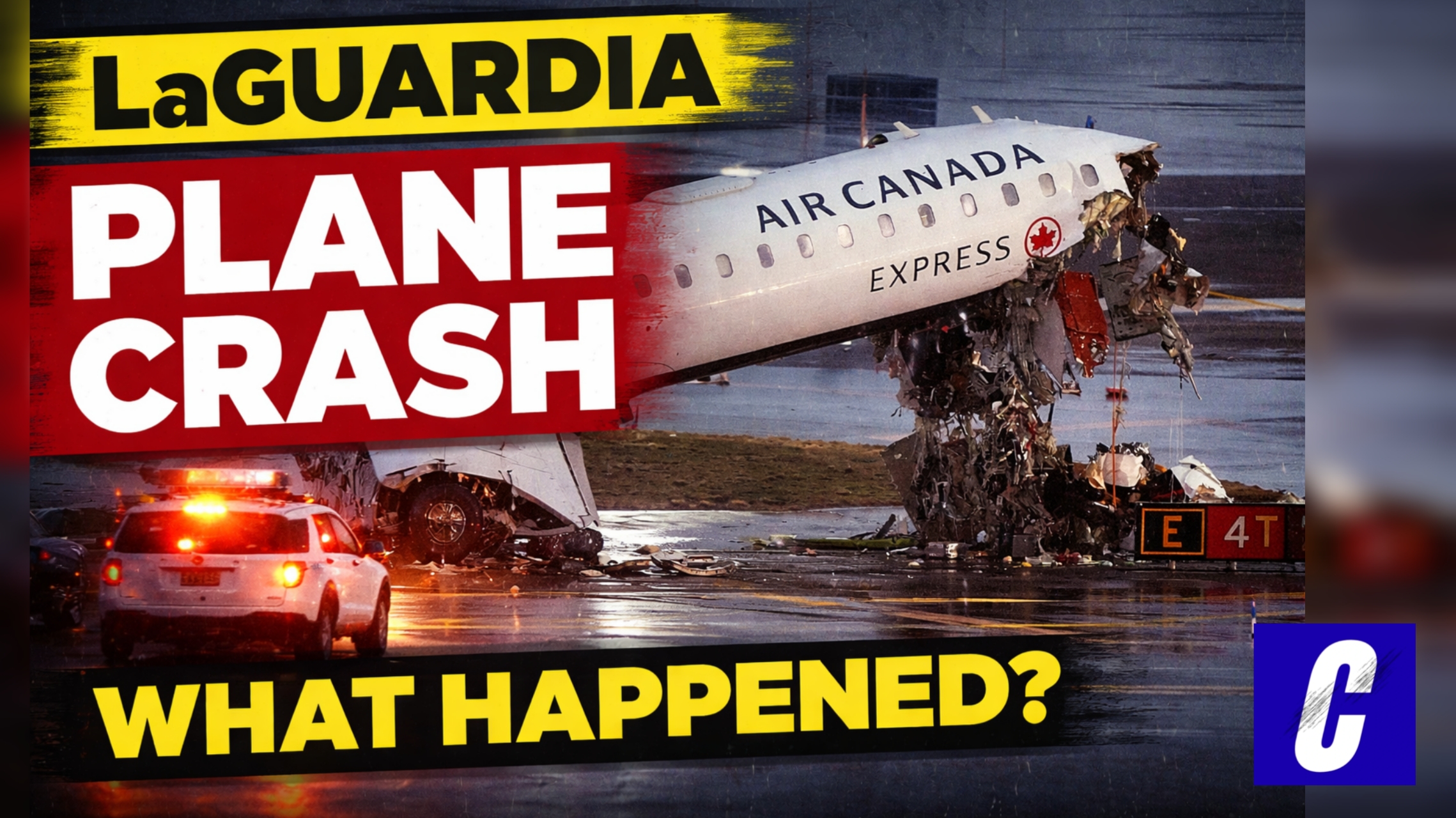
What should have been just another routine landing at LaGuardia Airport instead turned into a moment of chaos, fear, and loss.
Passengers on board an Air Canada Express flight had little warning that anything was wrong. Within moments, a standard descent became a violent runway incident — the kind aviation works obsessively to prevent.
When it was over, two pilots were dead, dozens were injured, and more than 70 people walked away with their lives. That contrast — tragedy in the cockpit, survival in the cabin — is what now defines this story.
What Happened
The aircraft, operated by Jazz Aviation for Air Canada, was landing when something went critically wrong on or near the runway.
- Impact: Early reports suggest a high-impact event involving the front section of the aircraft.
- The Physics: The cockpit absorbs the worst forces in many crashes, which helps explain why the outcome for pilots and passengers can be so different.
- The Response: Emergency crews arrived quickly. Passengers were evacuated. Some were shaken, some injured, but most were alive — a result that, in aviation terms, doesn’t happen by accident.
The Pilots: Honoring the Fallen
We now know the names of the two professionals who lost their lives in the cockpit.
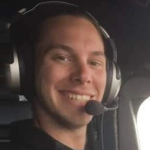
Antoine Forest, 30, seen in a cockpit photo during his time building his career in aviation.
- Antoine Forest (30): Originally from Coteau-du-Lac, Québec. Before taking to the skies, Forest worked as a lifeguard and was known for his dedication to safety in all forms. He had been with Jazz Aviation since 2022. Colleagues describe him as a pilot who “lived and breathed flying,” always seen with a smile when in the flight deck.

- MacKenzie Gunther: The second pilot (First Officer) on the flight.
Both pilots were based in Canada and have been hailed by the Air Line Pilots Association for their professionalism. In his final moments, it appears Forest and Gunther did everything in their power to bring the aircraft to a stop, likely saving the lives of the 72 passengers behind them.
Why So Many Passengers Survived
This is the part most people don’t think about. Modern aircraft are built with a brutal kind of logic: if something goes wrong, protect the cabin. Energy is absorbed, structures are reinforced, and evacuation systems are designed to work fast.
But design alone doesn’t explain survival. In many incidents, outcomes come down to split-second decisions. Pilots are trained for scenarios most people can’t even imagine, and when something goes wrong, they don’t get time to think twice.
A Community That Feels the Loss
Aviation is a small world pretending to be a big one. When something like this happens, it spreads quickly through pilot networks, training schools, and airline crews.
There’s a quiet understanding in the industry. Every pilot knows how narrow the margin can be between routine and disaster. While official tributes are still emerging, moments like this are felt deeply — especially when younger pilots are involved, still in the process of building their careers.
Bigger Questions That Won’t Go Away
LaGuardia is not an easy airport. High traffic, tight scheduling, constant pressure. This incident adds to ongoing concerns about:
- Runway congestion
- Air traffic control workload
- Increasing near-miss reports across U.S. airports
Investigators, including the Federal Aviation Administration, will now go through every detail — flight data, cockpit recordings, and maintenance logs. That process takes time. The conclusions, when they come, tend to reshape procedures across the entire industry.
The Reality
Air travel is still incredibly safe—statistically safer than almost anything else people do daily. But safety in aviation isn’t automatic. It’s built on learning from incidents exactly like this one.
Two lives lost. Dozens saved. And a long investigation ahead to understand why.
Key Questions & Answers
|
Question |
Answer |
|---|---|
|
How many people died? |
Two pilots lost their lives. Most passengers survived. |
|
Who was Antoine Forest? |
A 30-year-old pilot from Québec, Canada, working with Jazz Aviation. |
|
Why did passengers survive? |
The cockpit absorbs the most impact; cabins are designed for maximum reinforcement. |
|
What caused the crash? |
Under investigation. Possibilities include mechanical issues, human factors, or runway conditions. |
|
Is flying still safe? |
Yes, it remains one of the safest forms of transportation globally. |
|
Who is investigating? |
Authorities including the Federal Aviation Administration (FAA). |
Official Statements
- Air Canada / Jazz Aviation: Air Canada Provides Update on Air Canada Express Flight AC8646 — Official confirmation of the accident involving a Mitsubishi CRJ-900 operated by Jazz Aviation.
- Federal Aviation Administration (FAA): Statement on Air Canada Express Incident at LaGuardia Airport (LGA) — Preliminary report confirming the collision with an Aircraft Rescue and Firefighting (ARFF) vehicle on Runway 4.
📖 Continue Reading on CCASTER
- Logistics Under Pressure: The Economics of Delivery in the GTA and Beyond
- Market Watch: How Major Aviation Incidents Shift Global Economic Volatility
- For our Canadian Readers: A Guide to Federal Rebates and Support Programs for 2026