WASHINGTON — March 28, 2026
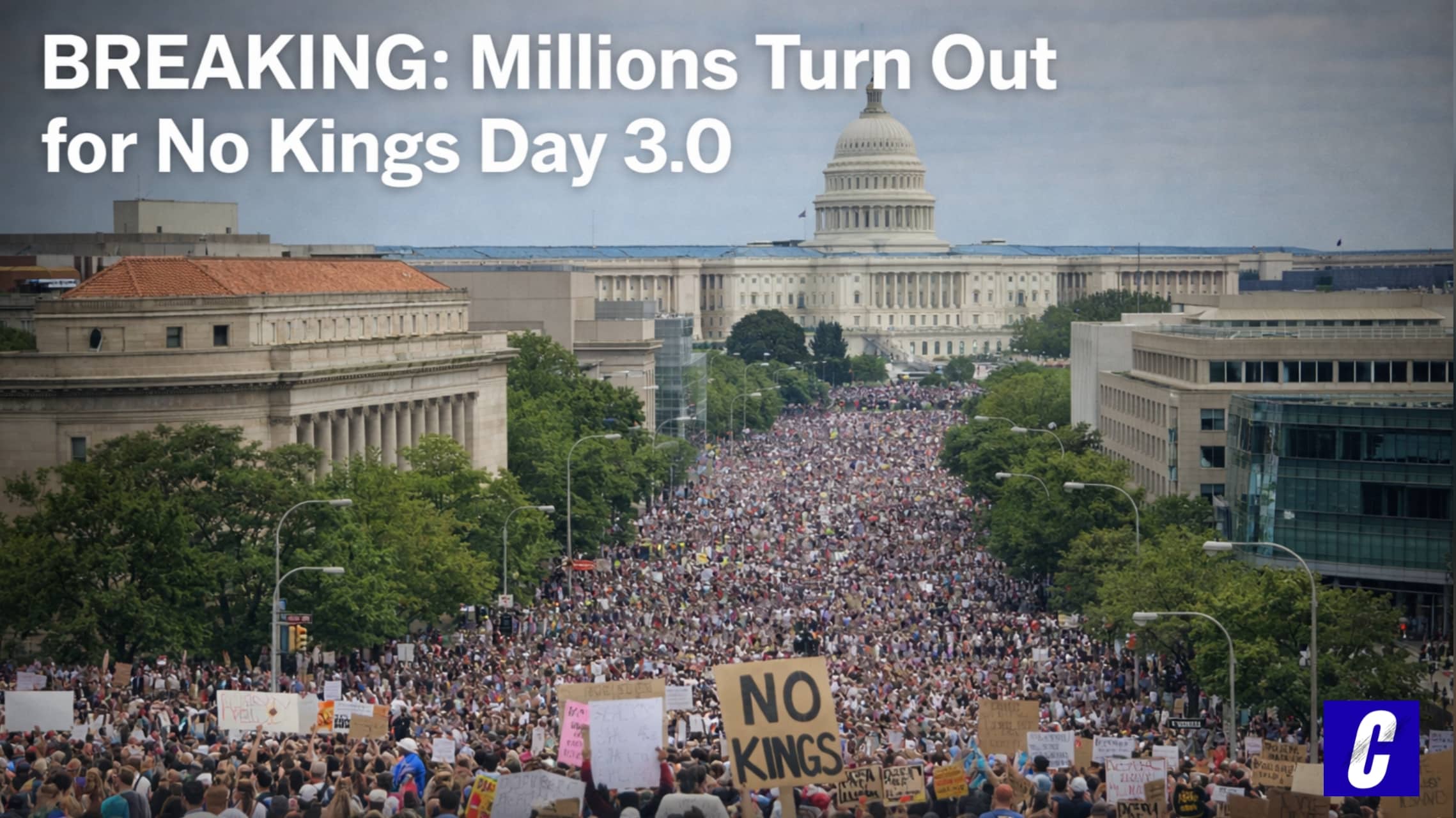
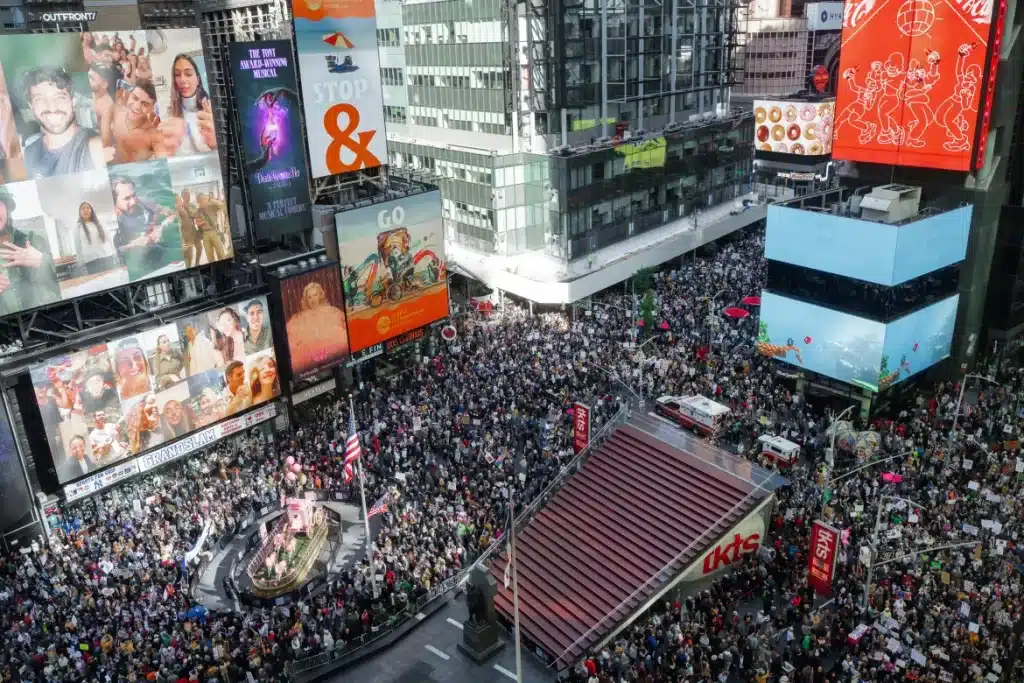
Millions of demonstrators flooded streets, plazas and public squares across the United States on Saturday for “No Kings Day 3.0,” a coordinated nationwide protest against President Donald Trump’s administration that organizers billed as the largest mobilisation yet in a growing anti-authoritarian movement. As crowds rallied against immigration enforcement and the war in Iran, Republicans privately voiced rising anxiety that they may struggle to hold the Senate in November—and U.S. officials confronted fresh reports that Russia has provided Iran with satellite imagery potentially relevant to attacks on American forces.
Source: AP NEWS
A protest movement’s third surge
Saturday’s actions represented the third major wave of “No Kings” protests since Trump’s second term began: an initial mobilisation in June 2025, a larger follow-up in October 2025, and now a third round branded “3.0.” In advance of Saturday, organizers said they had more than 3,100 events registered, up roughly 500 from October, spanning all 50 states and extending overseas into Europe and beyond.
The national flagship rally was staged at the Minnesota Capitol in St. Paul, where musician Bruce Springsteen headlined and a slate of prominent allies and speakers—including Sen. Bernie Sanders, Joan Baez, Jane Fonda and labour leaders—framed the day as a show of resistance to what they characterised as “invasions” of American communities through aggressive immigration enforcement. Springsteen used the stage to condemn federal actions and praise Minnesota’s earlier mobilisation against an ICE surge.
Across the country, demands were broad—ranging from immigration and civil liberties to transgender rights, economic power and the Iran war—producing a coalition that was simultaneously expansive and hard to define by a single policy objective.
Chronology from city halls to courthouse lawns
By midday, demonstrations were already under way in communities far beyond large coastal cities, a hallmark that organizers and researchers say can be crucial in sustaining civic movements.
In Houston, protesters gathered around noon at City Hall before marching downtown, with organisers providing a preliminary crowd count of roughly 22,000—slightly below their earlier local counts in 2025, but still one of the region’s largest political demonstrations in years. Participants cited the Iran war, immigration enforcement and rising costs, mixing satire and solemn appeals. One attendee, Farah Chickerneo, described the rally as “about keeping the momentum going,” while activist-art organisers invited protesters to sign a large banner echoing founding-era language and constitutional themes.
Source: Houston Chronicle
In Bloomington, Indiana, a local outlet estimated the crowd at about 2,000 at the Monroe County courthouse grounds. Speakers warned against what they called “masked secret police,” mass surveillance and the erosion of civil rights—language that echoed across multiple cities as demonstrators connected immigration enforcement to constitutional concerns.
In Oregon, public radio coverage documented thousands gathering at Springfield City Hall by noon, where organisers framed the day as solidarity with immigrant communities and as pushback not only against domestic enforcement, but also against the decision to launch the Iran war in late February.
Smaller cities and towns also played a visible role. In Big Rapids, Michigan, roughly 300 people rallied at a prominent intersection, with local organisers linking opposition to the Iran war to pressures on household budgets and civil liberties. One participant, JR Roberts, invoked historical battles against fascism and authoritarianism as a motivation for attending.
Mostly peaceful—amid scattered clashes and arrests
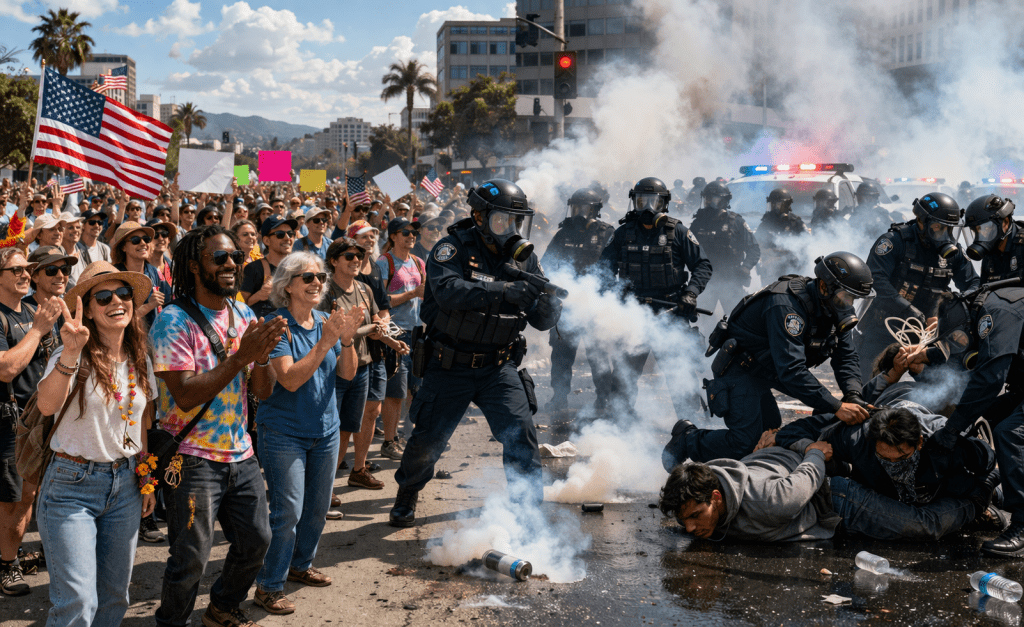
While the day’s tone was largely peaceful and, in many places, festival-like, law enforcement responses varied. In Los Angeles, police used tear gas near a federal detention center downtown and made arrests after orders to disperse; in Denver, police declared an unlawful assembly after a small group blocked a roadway, deploying smoke canisters and reporting arrests.
The White House response was dismissive. A spokesperson described the rallies as “Trump Derangement Therapy Sessions” amplified by “leftist funding networks,” while the National Republican Congressional Committee attacked the protests as “Hate America Rallies.”
Turnout estimates and historical context
Reliable crowd counting at national scale is difficult: there is no single “official” count, local methodologies differ, and early estimates may change as organisers and researchers compile after-action totals. That said, multiple major outlets converged on a common conclusion: No Kings Day 3.0 was among the largest coordinated protest days of the modern era, even if the precise magnitude remains uncertain.
Turnout estimate comparison
| Estimate (participants) | Geography described | Source basis | What’s known / key caveats |
|---|---|---|---|
| ~9 million (expected / projected) | U.S. + related international events (as described in reporting) | Organiser projection reported by The Associated Press | AP reported organisers “expected 9 million,” while noting it was not clear whether that expectation was met. [7] |
| ~8 million (estimated) | “Nationwide” participation; thousands of events | Wall Street Journal reporting | WSJ described participation “estimated at eight million,” alongside event counts in the thousands; methodology not fully transparent in the excerpted reporting. [14] |
| “Over 8 million” (reported) | Global day of action; 3,300+ events worldwide | San Francisco Chronicle reporting | SF Chronicle framed the day as record turnout globally, citing over 8 million participants and more than 3,300 events worldwide. [15] |
Historical comparisons that help contextualise “one of the largest”
Even if No Kings Day 3.0 set a modern benchmark, American protest history includes earlier mobilisation on a larger estimated scale. Encyclopaedia Britannica describes the first Earth Day (April 22, 1970) as the largest single-day protest in U.S. history, with an estimated 20 million participants.
For more recent reference points: Britannica summarises the Women’s March (2017) at up to ~5.3 million participants across U.S. events in some estimates, widely regarded as among the largest single-day demonstrations in the country’s history.
And while not a single-day event, research cited by Harvard Kennedy School notes that 15 million to 26 million people participated in the George Floyd/Black Lives Matter protests over time, making it one of the largest sustained protest movements in U.S. history.
Researchers also emphasise that size alone is not destiny: a Washington Post analysis of the No Kings movement notes that empirical work (including an NBER study on 2017–2022 demonstrations) often finds limited direct attitudinal or behavioural shifts from protest activity, while other scholarship—such as Harvard professor Erica Chenoweth’s work—argues that nonviolent movements have higher odds when participation reaches a critical mass (often referenced as roughly 3.5% of the population) and is supported by sustained organising infrastructure.
Senate politics: GOP concerns, public polling, and what the map shows now
While protesters chanted about constitutional rights and foreign wars, Senate Republicans’ private focus has been more practical: candidate quality, money, and a map that appears to be widening.
Inside the GOP worry: “far less certain”
In early February, Axios reported that senior Republicans and strategists were increasingly alarmed by private polling and a deteriorating national environment—enough that some now describe a Democratic Senate takeover as a “distinct possibility.”
Axios described GOP operatives watching not just well-known battlegrounds like Michigan, Maine and North Carolina, but also warning signs in Alaska, Iowa and Ohio. It also reported that Republican leaders raised concerns in a closed meeting, with NRSC chair Sen. Tim Scott presenting what Axios called a “sobering” message about headwinds.
One driver of the anxiety, per Axios: issues that powered Trump’s 2024 win—immigration and the economy—are now liabilities in parts of the electorate, amid public frustration over costs and the Iran war’s spillover effects.
What public polling suggests in key Senate races
Public polling remains early and fluid, but several of the races highlighted by strategists are already tight.
In Maine, the RealClearPolling average for Gov. Janet Mills (D) vs. Sen. Susan Collins (R) shows Mills up about half a point, essentially a tie in practical terms. Individual polls in the average vary from Collins leading to Mills leading.
In North Carolina, RealClearPolitics/RealClearPolling averages show Roy Cooper (D) ahead of Michael Whatley (R) by about 8.5 points in a marquee open-seat contest.
In Georgia, RealClearPolling’s listed matchup between Sen. Jon Ossoff (D) and Rep. Mike Collins (R) shows Ossoff leading by roughly 2.8 points in the average—again, competitive.
In Ohio’s special election, the RealClearPolling average shows Sen. Jon Husted (R) leading Sherrod Brown (D) by about 1.4 points, an extremely narrow margin for a state Republicans are accustomed to winning more comfortably.
In Texas, RealClearPolling’s averages show Sen. John Cornyn (R) up about two points over James Talarico (D), while a hypothetical Ken Paxton (R) vs. Talarico matchup is even tighter, underscoring GOP concerns that a turbulent primary could create general-election risk—even in a state Democrats have not won statewide in decades.
How forecasters rate the battlefield
Race ratings still generally imply Republicans have an edge nationally—yet several pivotal states are placed in the most competitive tiers. The Cook Political Report’s Senate ratings (as of Jan. 12) list Georgia, Maine, Michigan and North Carolina as Toss Up, with Alaska and Ohio as Lean Republican, and Iowa and Texas as Likely Republican.
That mix of competitive and near-competitive contests helps explain why GOP strategists describe a need to defend more turf than expected—particularly if the national environment continues to sour amid war and economic strain.
National security: reports Russia shared satellite imagery with Iran and official reactions
What’s been reported—and what’s been denied
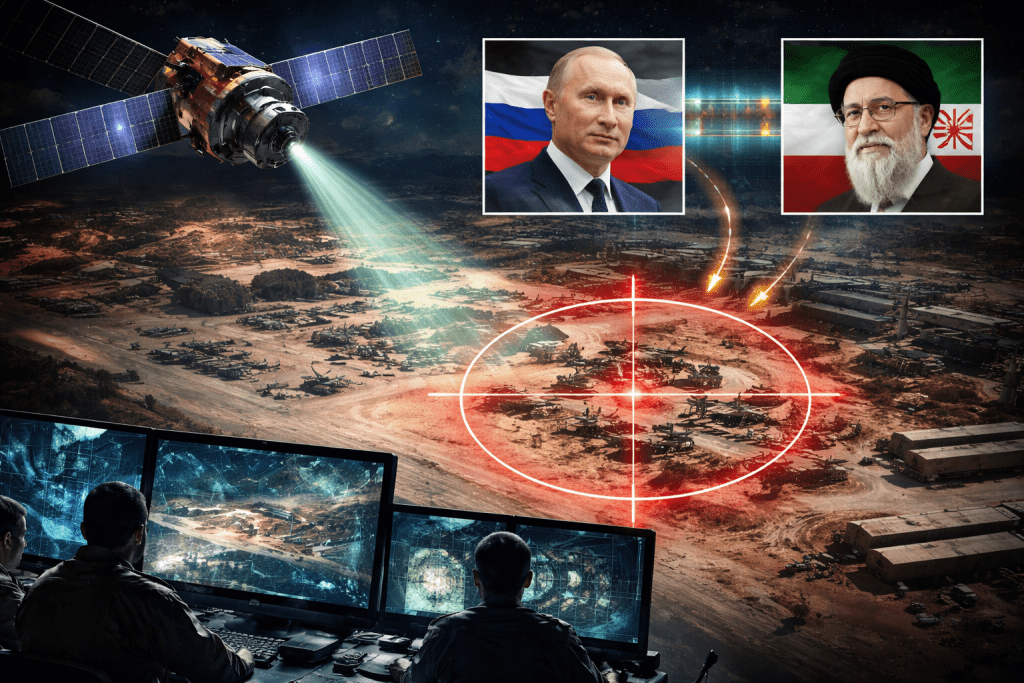
A key national security thread running alongside the protests involves allegations that Russia has shared intelligence—potentially including satellite imagery—with Iran in ways that could improve Iranian targeting of U.S. forces in the Middle East.
Reuters reported March 17 that the Wall Street Journal said Russia has expanded intelligence-sharing and military cooperation with Iran, including satellite imagery and improved drone technology, citing people familiar with the matter; Reuters said it could not immediately verify the report.
The Kremlin has publicly rejected such claims. In a Reuters dispatch carried by Al-Monitor, spokesman Dmitry Peskov called the WSJ reporting “fake news.”
The U.S. posture: downplaying operational impact, providing limited confirmation
U.S. officials have responded in calibrated terms—highlighting awareness and operational vigilance while declining to publicly confirm sensitive intelligence details.
In an account summarising U.S. remarks, Al Jazeera reported that Defense Secretary Pete Hegseth said the U.S. was “tracking everything” when asked about the reports and that the Pentagon was “not concerned,” adding that “anything that shouldn’t be happening… is being confronted.” The same reporting said White House press secretary Karoline Leavitt argued the alleged intelligence-sharing was not affecting U.S. military operations against Iran.
Why satellite imagery matters in this conflict
Satellite imagery is not only the domain of militaries; commercial providers and open-source analysts have played an increasingly visible role in documenting strikes and damage across the region. The growing military relevance of satellite data is also why some commercial firms have restricted access to imagery that could be used for “battle damage assessment,” according to reporting on a major satellite company’s decision to pause certain imagery-related services during the conflict.
Meanwhile, the broader war has highlighted an information environment where imagery—real, delayed, manipulated, or restricted—can influence public understanding and strategic decision-making, as technology reporting has noted.
Against that backdrop, the allegation that a major state actor is directly supplying imagery to another belligerent actor carries significant implications: it would suggest not merely propaganda or public OSINT exploitation, but state-to-state intelligence cooperation in active combat operations—an escalation that could pressure Washington to reconsider force protection, information security, and deterrence messaging even if officials publicly project confidence.
Related Posts
Explore more insights and analysis on U.S. politics, global tensions, and public sentiment:
Trump’s $2,000 Tariff Dividend Proposal — What It Means for Americans
A breakdown of the proposed economic policy and its potential impact on voters and the broader economy.