While the world obsesses over oil prices and geopolitical conflicts, a far more dangerous crisis is quietly unfolding—fertilizer shortages. Unlike oil shocks, which hit economies, fertilizer shortages strike something far more fundamental: food.
And when food breaks, everything breaks.
The Overlooked Backbone of Global Food Supply
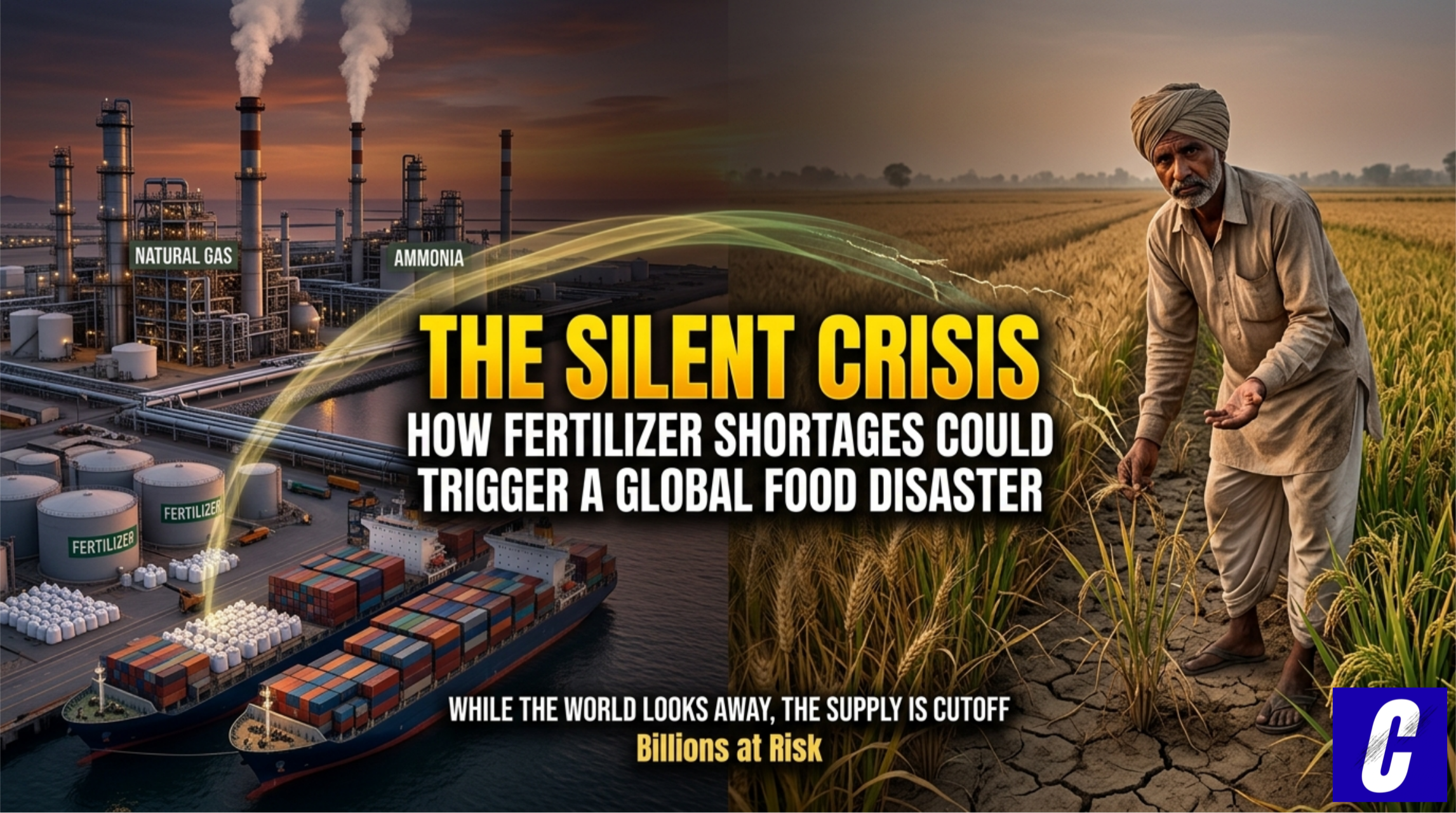
Modern agriculture is completely dependent on fertilizer, especially nitrogen-based fertilizers like urea. Without them, crop yields collapse. At the center of this system is a simple but critical input: natural gas.
- The Chemical Link: Natural gas, primarily methane, is essential for producing ammonia—the key building block of nitrogen fertilizers.
- The Dependency: No gas, no ammonia. No ammonia, no fertilizer. No fertilizer… well, you can guess where that goes.
Why the Gulf Matters More Than You Think
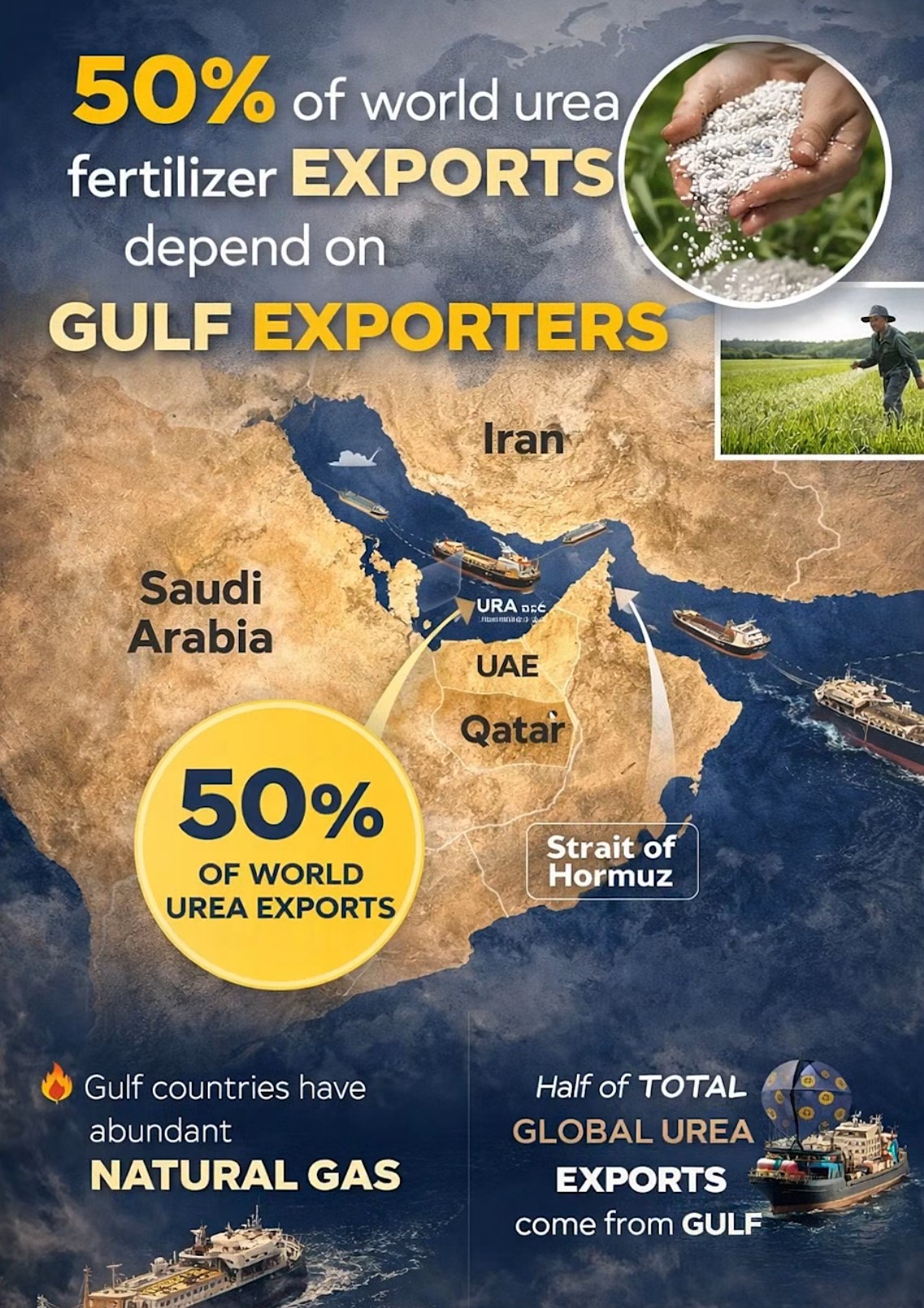
Roughly 50% of global urea fertilizer trade is linked to exporters in the Gulf region. Countries in this region dominate production because they have abundant and cheap natural gas.
That makes the global food system dangerously dependent on a single variable: steady gas supply from a concentrated region. If that supply weakens—even slightly—the ripple effects hit globally.
The Cracks Are Already Showing
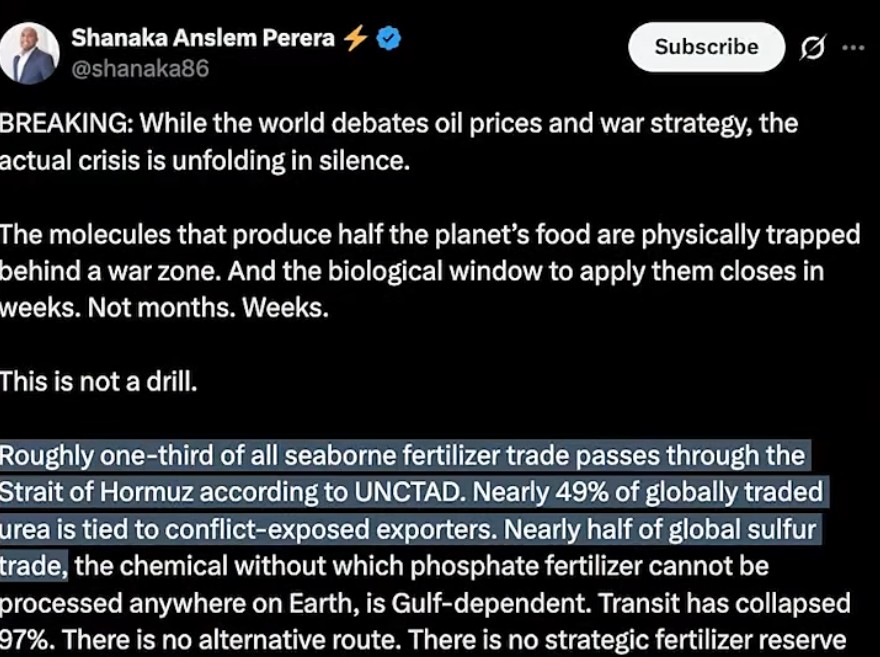
This isn’t some future hypothetical; it’s already happening:
- Bangladesh: At least six fertilizer factories have shut down due to gas shortages.
- India: Fertilizer plants are operating at only ~60% capacity.
- China: A major producer of phosphate fertilizers, China is tightening exports to protect its own future needs.
- Diplomatic Shifts: India has already approached China for additional supply to bridge the gap.
Demand Is Too Big to Fail
Even major producers can’t keep up. India, despite being one of the world’s largest fertilizer producers, still struggles to meet domestic demand. Its agricultural system depends heavily on constant fertilizer supply to sustain food production for over a billion people.
Now scale that problem globally.
From Fertilizer Shortage to Food Crisis
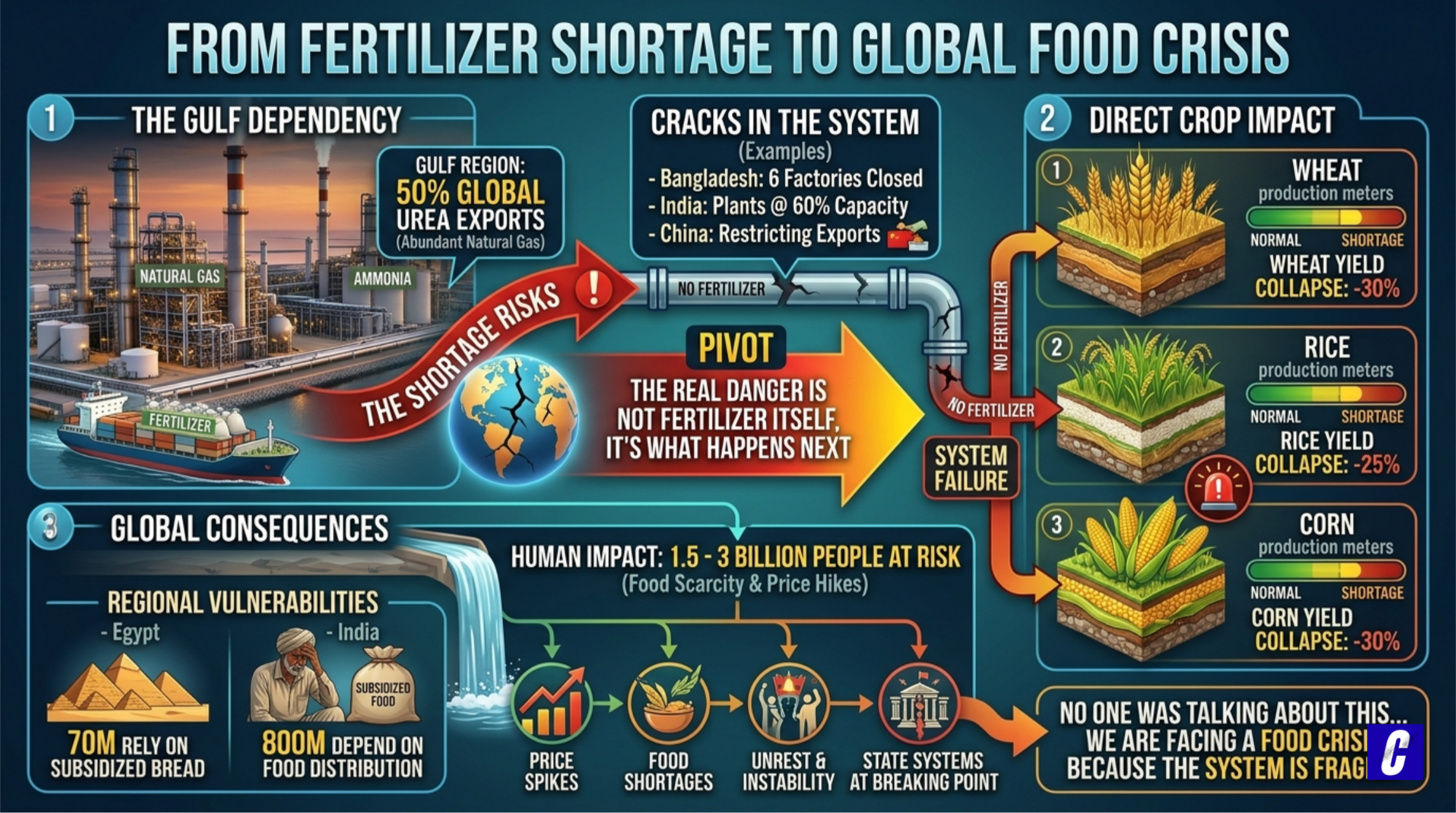
The real danger isn’t fertilizer itself. It’s what happens next. A shortage in fertilizer directly reduces yields of staple crops:
- Wheat
- Rice
- Corn
These three crops form the backbone of global food security. Even a modest drop in production can trigger food shortages, price spikes, and political instability.
Right now, around 300 million people already face acute food insecurity. A fertilizer shock could push that number into the billions—potentially affecting 1.5 to 3 billion people through either lack of food or unaffordable prices.
The Countries at Immediate Risk
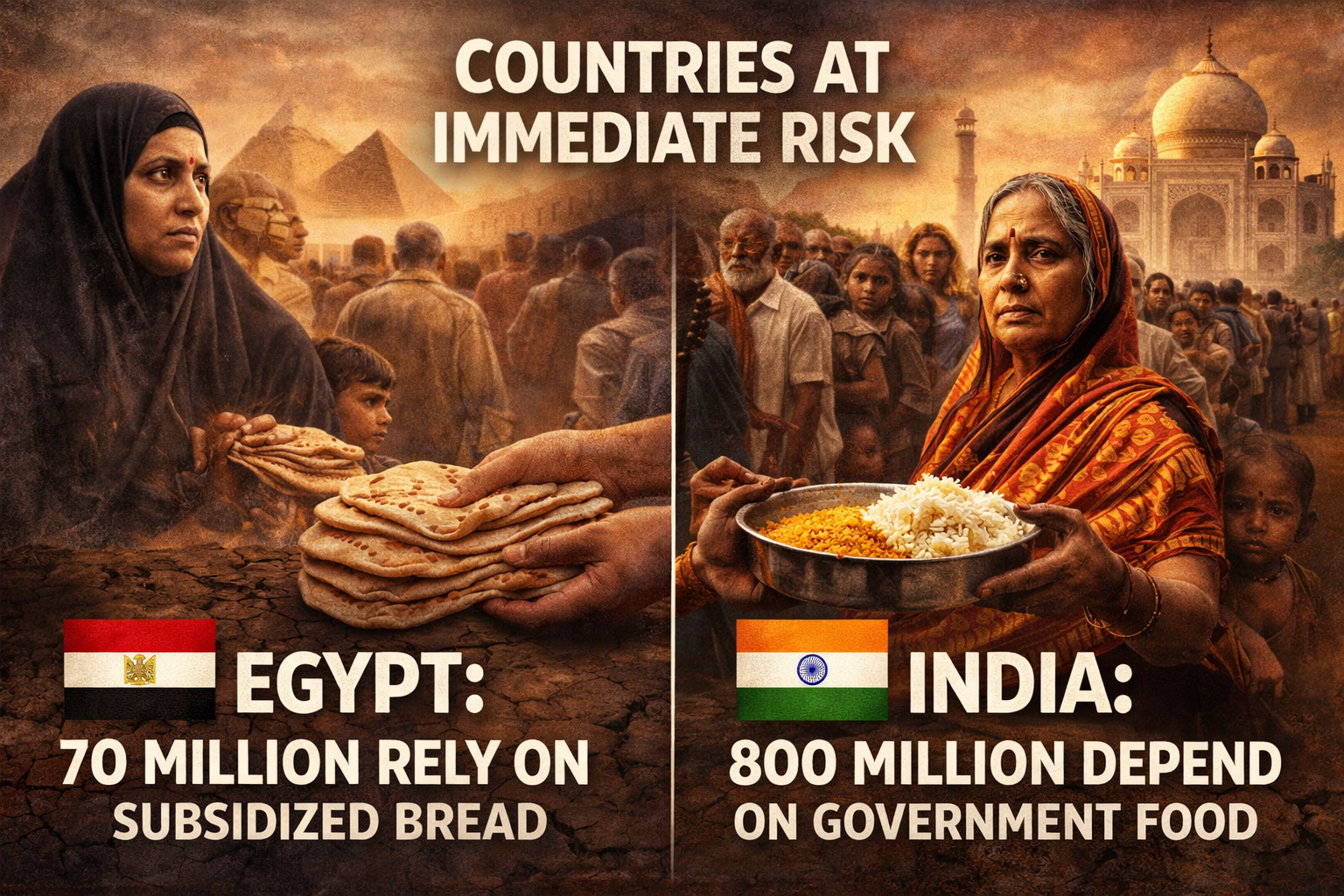
Some nations are especially vulnerable due to their massive subsidy programs:
- Egypt: Around 70 million people rely on subsidized bread programs just to eat daily.
- India: Over 800 million people depend on government-supported food distribution.
These systems only work when food stays cheap and abundant. Fertilizer shortages threaten both.
Why No One Is Talking About This
Because fertilizer isn’t “exciting.” It doesn’t trend. It doesn’t explode. It doesn’t come with dramatic visuals. But it’s far more dangerous than oil crises in the long run.
- Oil affects transportation and industry.
- Fertilizer affects whether people eat.
The Bottom Line
This isn’t just an agricultural issue. It’s a systemic risk to global stability. The world has built a food production system that depends heavily on:
- Cheap natural gas
- Concentrated fertilizer production
- Just-in-time global trade
The uncomfortable truth? We’re not facing a food crisis because there isn’t enough land or technology. We’re facing it because the system behind food production is fragile—and no one bothered to stress-test it until now.