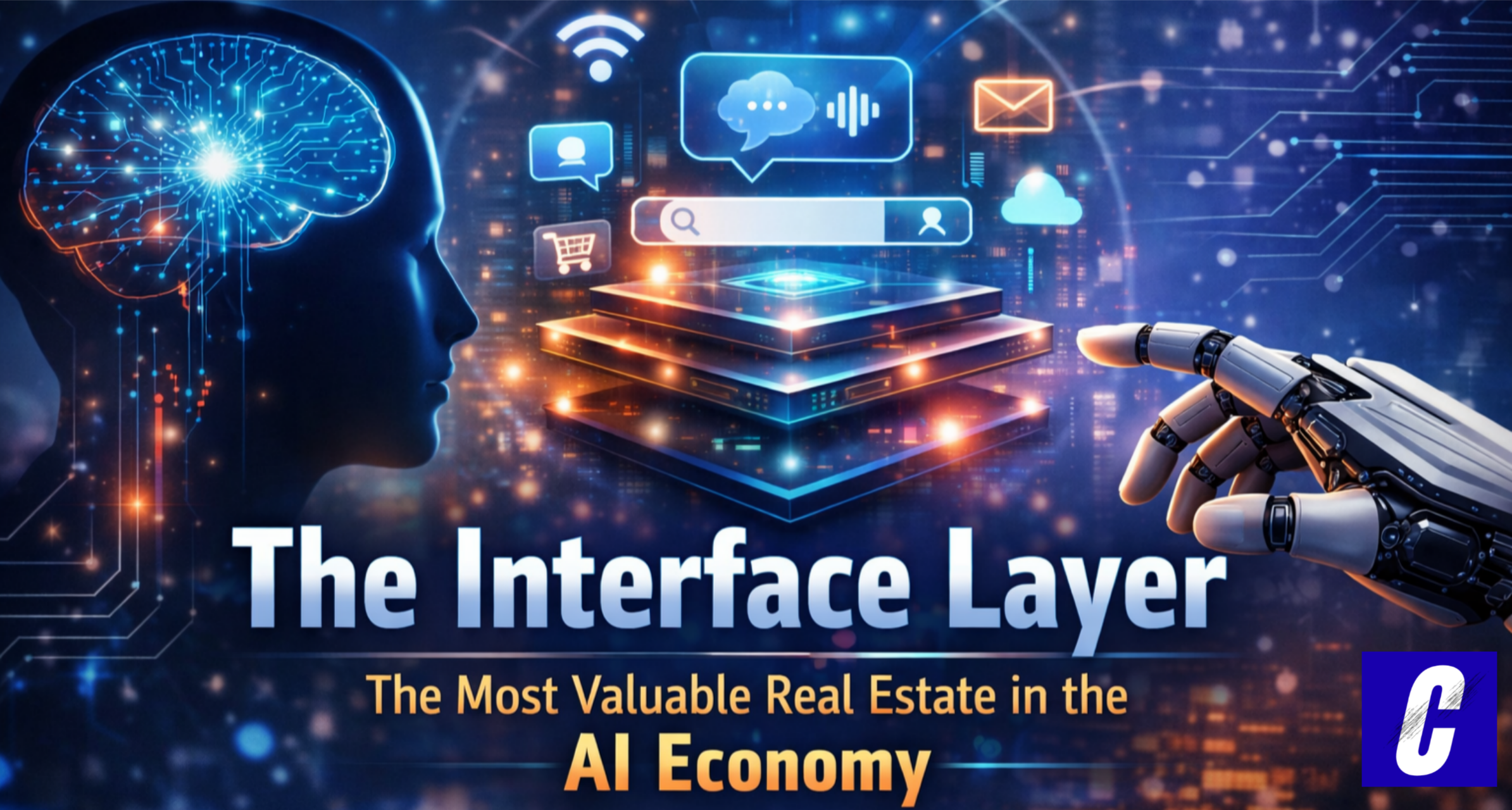
Every major technology era has been dominated by a single strategic layer: the interface between humans and machines.
- In the 1990s it was the operating system.
- In the 2000s it was the search engine.
- In the 2010s it was the smartphone.
Each of these interfaces became the gateway through which billions of people interacted with the digital world. The companies that controlled them—Microsoft, Google, and Apple—didn’t just build popular products. They controlled how information, software, and commerce flowed across the entire internet.
Today a new interface is emerging, and it may become the most powerful one yet: AI assistants.
The next decade will not simply be about better artificial intelligence models. It will be about who owns the interface through which humans interact with AI.
Why Interfaces Create Empires
Interfaces matter because they shape behavior. Users rarely think about the deeper layers of technology. They interact with whatever sits closest to them: the screen, the keyboard, the search bar, or the app icon.
Once an interface becomes dominant, three powerful effects appear:
- Distribution: Every service must pass through the interface to reach users.
- Data accumulation: The interface collects enormous amounts of behavioral data.
- Economic leverage: The interface owner can decide which services get visibility and which do not.
Microsoft used Windows to dominate desktop computing. Google used search to control information discovery. Apple used the iPhone and App Store to shape the mobile economy. These companies weren’t simply building software. They were controlling the entry point to the digital world.
AI Changes the Nature of the Interface
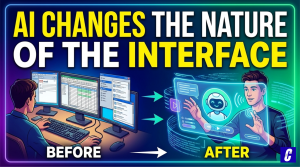
Traditional interfaces require humans to navigate systems manually. You search, click links, compare results, read reviews, and make decisions step by step.
AI compresses this process.
Instead of navigating a website, a user can ask a question:
- “Find the best laptop under $1500.”
- “Plan a three-day trip to Tokyo.”
- “Summarize these documents and draft a response.”
The assistant performs the research, analysis, and synthesis. In other words, AI doesn’t just help users interact with software. It replaces the traditional interaction model entirely. The interface becomes a conversation, not a navigation system.
This shift may sound subtle, but it dramatically changes where power sits in the technology stack.
Whoever Owns the AI Interface Controls Everything Beneath It
When an AI assistant becomes the primary interface, it decides:
- Which sources are used for answers
- Which products are recommended
- Which services are integrated
- Which platforms receive traffic
In the past, websites competed for search rankings. In the future, companies may compete to be chosen by an AI assistant. If an assistant recommends one product over another, that decision could determine millions of dollars in revenue.
This turns AI interfaces into something more powerful than search engines. They don’t just direct traffic. They make decisions on behalf of users.
The New Battle for the Interface Layer
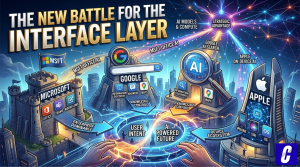
Major technology companies understand this shift, and each is trying to secure the AI interface in a different way.
- Microsoft is embedding AI directly into productivity software like Office and enterprise workflows. Their strategy focuses on owning the AI interface for work.
- Google is integrating AI into search and attempting to transform the search bar into an AI assistant. For Google, the goal is preserving its control over information discovery.
- Apple is likely to emphasize device-native AI experiences. With billions of devices in users’ hands, Apple can embed AI deeply into the operating system itself.
Each company is trying to control the point where users first interact with AI. The winner of that battle gains enormous strategic advantage.
The Quiet Threat to Websites and Apps
One of the least discussed consequences of AI interfaces is the potential decline of traditional websites. For decades, websites have been the primary way businesses present information and sell products.
But AI assistants can bypass this model entirely. Instead of browsing multiple websites, a user might ask an assistant to:
- Compare insurance plans
- Book flights
- Purchase household items
- Find legal or medical information
The assistant gathers information from many sources and returns a single recommendation. In that world, businesses no longer compete only for website visitors. They compete for inclusion in AI decision systems. The website becomes less of a destination and more of a data source.
From Browsing to Delegation
Another shift is psychological. Traditional computing requires active participation from users. You search, evaluate options, and make choices.
AI encourages delegation.
Users increasingly allow systems to perform tasks for them. Planning trips, selecting products, managing schedules, even drafting communications. As AI systems improve, this delegation expands. The interface stops being a tool and becomes something closer to a digital agent acting on the user’s behalf.
That makes the interface even more valuable, because it begins to influence not just information flow but decision making itself.
Why the Interface Layer Will Define the AI Economy
Artificial intelligence models will continue to improve and become widely available. Over time, the underlying technology may become commoditized. But interfaces are harder to replace. Users rarely switch interfaces once habits form. This creates powerful lock-in effects.
The company that successfully establishes the dominant AI interface will gain several advantages:
- Continuous access to user intent and behavior
- Control over service integration
- Influence over purchasing decisions
- Massive streams of data for improving systems
In short, controlling the interface means controlling the economic gateway to the AI ecosystem.
The Next Technology Giants
The companies that dominate the next decade will not simply build the best AI models. They will build the interfaces people rely on every day.
History shows that the most valuable position in technology is not always deep in the infrastructure stack. It’s often the layer closest to the user. Operating systems, search engines, and smartphones each reshaped the technology landscape by becoming the primary gateway to digital activity.
AI assistants may become the next gateway. And if that happens, the battle for the interface layer will determine who controls the future of the AI economy.