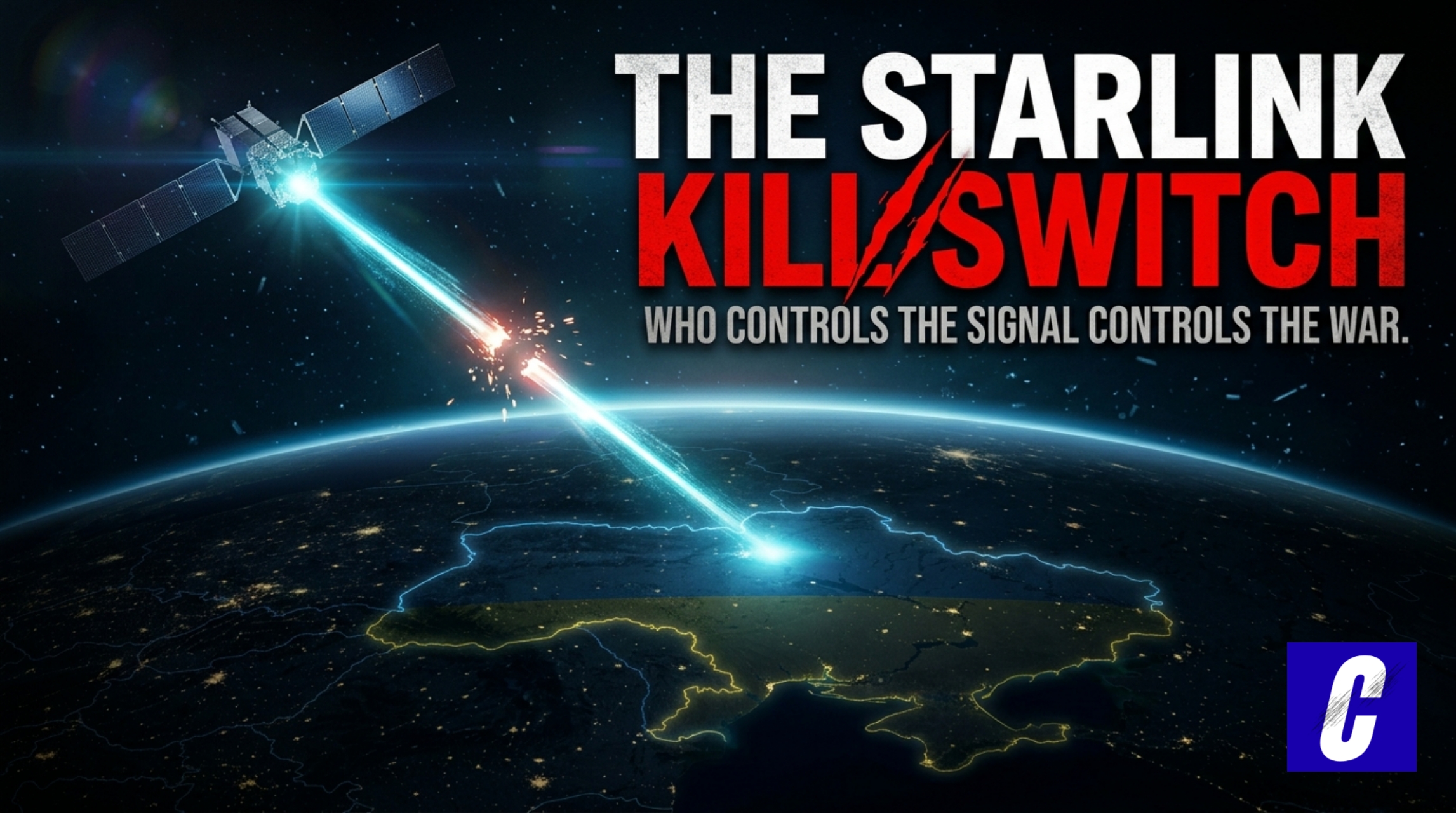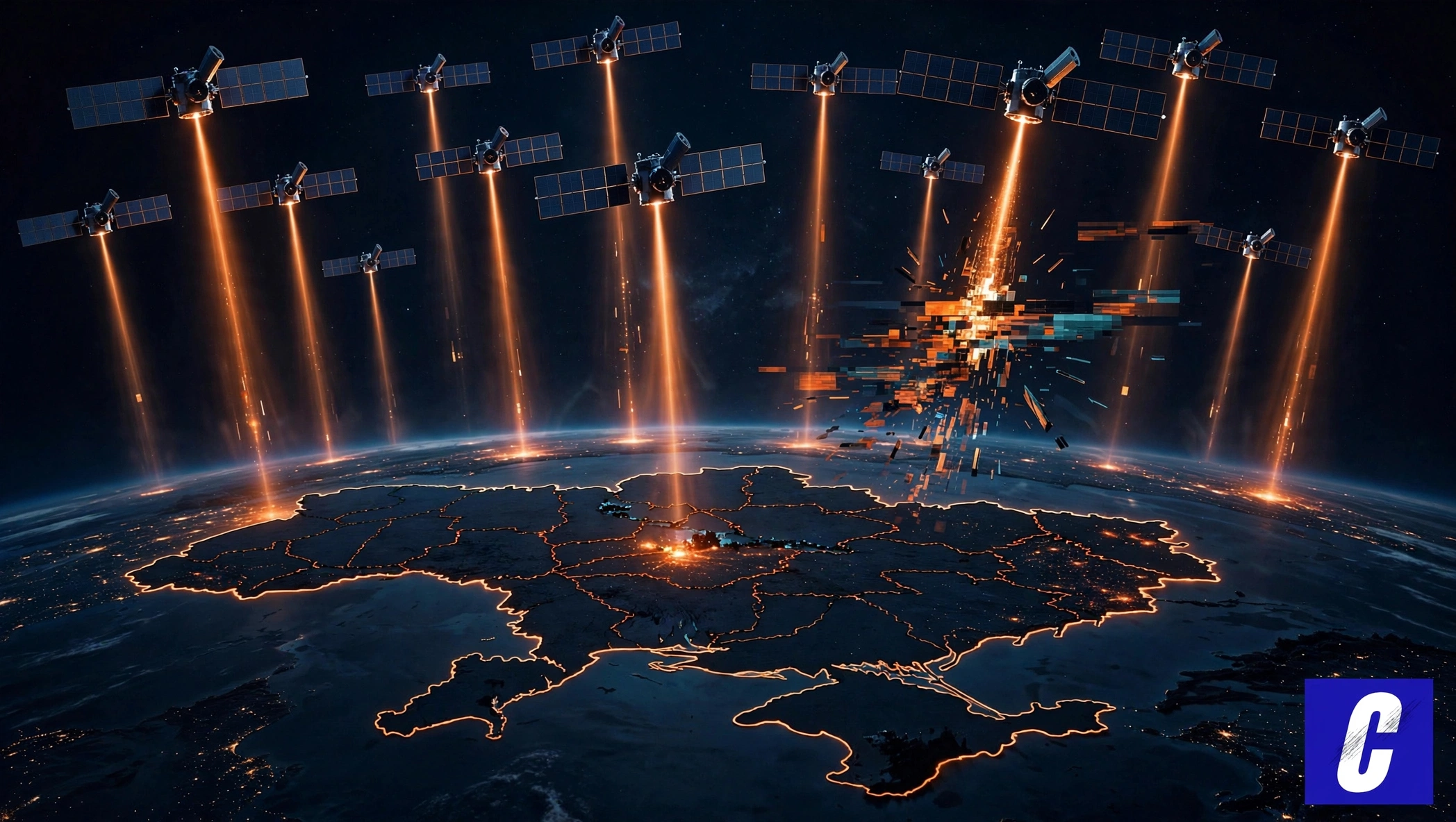
Three days ago I wrote that Ukraine’s war got throttled from an office in California. Since then, Washington has managed to tell three different stories about the same speed cap — and the contradictions are now the story.
Here’s where things stand.
Three Stories, One Throttle
Elon Musk’s version: the 160 km/h cap on military Starlink terminals was Washington’s call. Starshield, he posted, is “owned and controlled by the US government” — restrictions “decided by the US military and ultimately POTUS.” Clean chain of command. Somebody’s government did this.
Donald Trump’s version: “It wasn’t me. And I don’t think it was Elon… What I understand is, (it’s) the same as it’s always been.” So not the president, probably not Musk either. Somebody’s government did this, but nobody in particular.
Marco Rubio’s version: there was never anything to throttle. Speaking at Joint Base Andrews, the Secretary of State drew a hard line — “Starlink is a commercial product… Starshield is a defence product, a military product” — and said Ukraine has no Starshield access at all: “They do not have access to it at this moment.” On the slowdown itself: “No one at the White House ordered anyone to slow down internet,” calling the reports “categorically false.” And on Zelenskyy: “I’m not sure Zelenskyy knows what he’s talking about, but it wasn’t deliberate. We have nothing to do with that.”
Read those three together and tell me who turned the dial. Musk says the government did it. Trump says nobody did it. Rubio says there was no military system involved to begin with. Somebody’s lying, or nobody understands the system they’re arguing about. Neither option is comforting.
What Kyiv Says — With Numbers That Keep Moving
While Washington argues about definitions, Ukraine is counting the cost in kilometers per hour — and even the numbers won’t sit still.
Zelenskyy said Saturday the terminals cut out at 161 km/h inside Ukraine, while the same hardware keeps working past 180 km/h on EU territory. His own adviser still cites 160. Zelenskyy himself earlier said 70. Defense ministry sources told reporters some units lost connection as low as 72 km/h. Four numbers, one constellation.
The one thing Kyiv won’t hedge on: “This will cost many of us our lives,” Zelenskyy said. Drone adviser Beskrestnov told AP it’s “not only a technical issue and not only a business issue, but also a political one” — and confirmed Ukraine is negotiating directly with SpaceX and the Pentagon to get the cap lifted.
Rubio, for his part, said the service has “reportedly been restored to its previous level.” Kyiv’s response, in effect: restored to what, exactly? Nobody has confirmed the speed cap itself is gone.

The Accountability Vacuum
This is where part one of this story comes back with interest. The original warning was about a kill switch — one company, one software update, one war gone dark. That’s still true. But the last 72 hours revealed something worse underneath it: there is no one to hold accountable, because no one will claim the switch.
A bipartisan letter went to the Pentagon’s inspector general on October 16th asking for an investigation into whether SpaceX or the Defense Department “directed, authorized, or implemented” the restrictions. Note what that letter is really saying: three days after the fact, the United States Congress does not know who did this either. That’s not oversight catching up. That’s oversight starting from zero.
And the backup plan? The EU floated Ukraine joining its Govsatcom program — connection possible in early 2027, military-grade comms not before 2029. Three more years of flying through somebody else’s terms of service.
The Verdict: The Asterisk Got Bigger
Part one ended with “sovereignty with an asterisk.” Here’s the updated version: the asterisk now has its own asterisk.
It’s not just that a foreign constellation can throttle your military by software update. It’s that when it happens, the company blames the government, the president blames nobody, the Secretary of State says the system in question was never yours to begin with — and Congress has to write a letter to find out what happened. The kill switch works. The accountability doesn’t.
For India and every other country lining up to sign Starlink contracts: the question was never just “can they turn it off.” It’s “when they do, who do you even call?” Right now, in the middle of a war, with 30,000 terminals on the line — nobody can answer that.
So where do you land — is this a Musk problem, a Washington problem, or proof that no country should ever route its military through someone else’s satellites? Let’s argue about it in the comments.
What to Watch Next
- The Pentagon IG letter. Does the inspector general actually open an investigation — and does it name who ordered the cap?
- The speed cap itself. Is the 160/161 km/h limit actually lifted, or just “restored” in name? Kyiv’s numbers will tell.
- The Starshield question. Rubio says Ukraine never had access. Musk’s original framing assumed the throttled terminals were government-controlled Starshield. Somebody’s definition is wrong, and the answer decides who was even allowed to touch the dial.
- India’s spectrum call. Still the biggest domino for the Global South — and every contradictory statement out of Washington makes New Delhi’s caution look smarter.