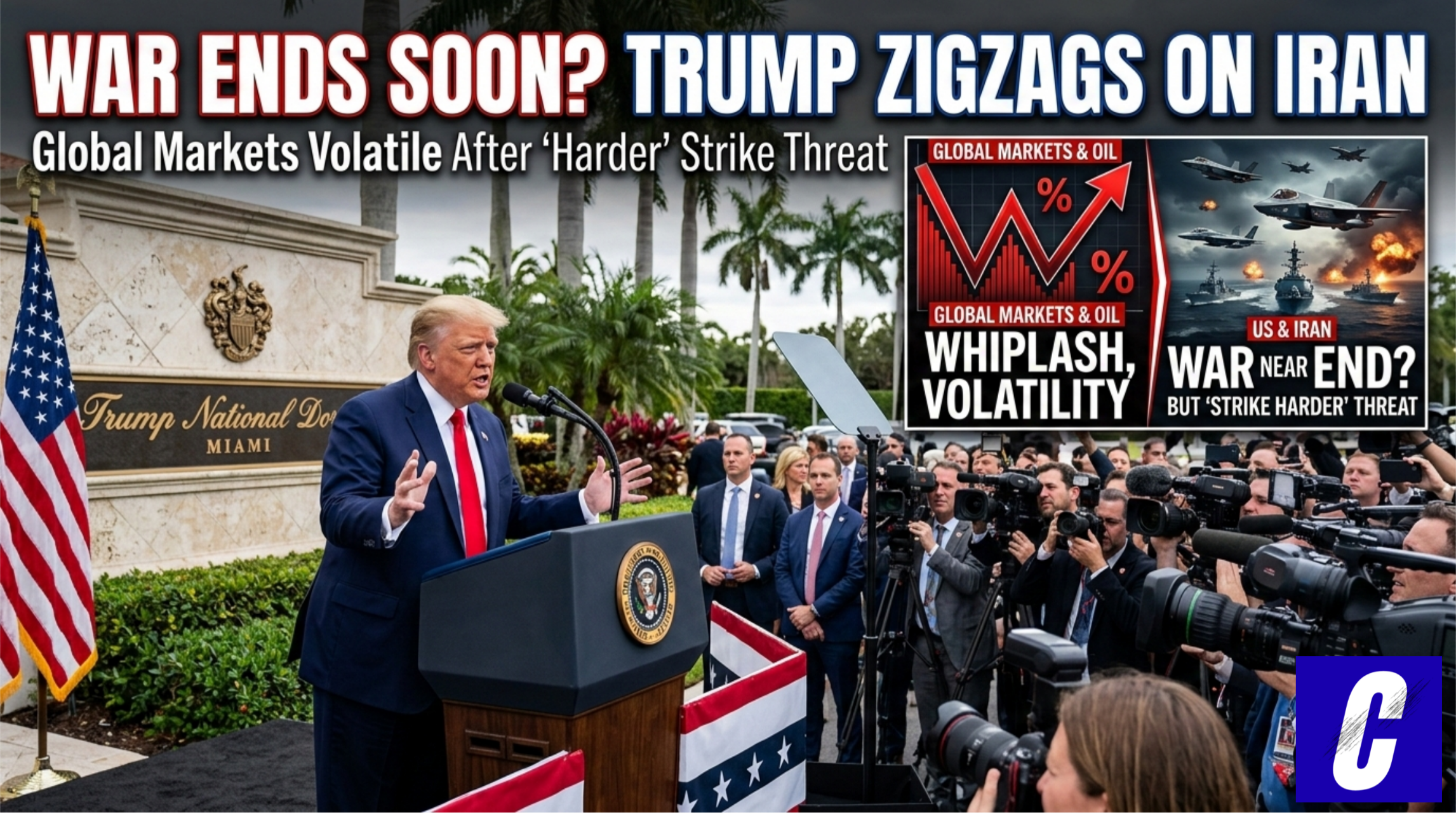
DORAL, FL — Global markets experienced a day of intense volatility as President Donald Trump delivered a series of zigzagging statements regarding the U.S. military campaign in Iran. Speaking from his Doral resort on Monday, the President oscillated between declaring the war “virtually over” and warning of catastrophic escalation if Tehran does not meet American demands.
The briefing comes at a critical juncture for the global economy, which has been shuddering under the weight of spiked energy costs and disrupted trade routes since the commencement of “Operation Epic Fury” on February 28.
The “Soon” vs. “Harder” Dichotomy
President Trump’s rhetoric during the conference appeared designed to project both ultimate strength and a desire for a swift exit.
”It’s going to be ended soon,” Trump told reporters, suggesting that the primary military objectives—the degradation of Iran’s navy and air defenses—had been largely achieved. “We’ve done a job like nobody has ever seen. Their navy is at the bottom of the ocean. Their communications are gone.”
However, the “soon” timeline was immediately tempered by a stark warning. The President noted that the U.S. has refrained from striking Iran’s electrical grid and specific civilian-adjacent infrastructure, but cautioned that these targets remain on the table.
”We have the most important targets saved for later,” Trump said. “If we have to strike harder, we will strike in a way that they will never recover from. We aren’t looking to do that, but we are ready.”
Economic Aftershocks and Energy Prices
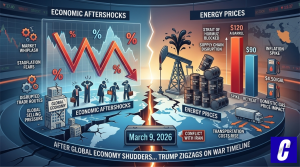
The President’s comments sent immediate ripples through the commodities markets. After a week of “shuddering” growth, oil prices saw a dramatic “whipsaw” effect:
- The Spike: Crude initially climbed toward $120 a barrel early Monday on fears of a prolonged conflict.
- The Retreat: Prices dipped back toward $90 following the President’s suggestion that the fighting was nearing a conclusion.
Economists warn that the global economy remains in a fragile state. The closure of the Strait of Hormuz remains a primary concern for energy-dependent nations in Europe and Asia, fueling fears of a “stagflation” crisis—where high inflation meets stagnant economic growth.
The Succession Crisis in Tehran
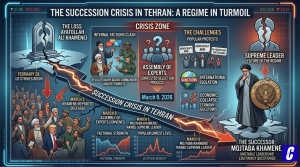
Adding to the uncertainty is the internal shift within the Iranian leadership. Following the reported death of Supreme Leader Ali Khamenei in the early waves of U.S. strikes, the transition to his son, Mojtaba Khamenei, has done little to ease tensions.
Trump expressed “disappointment” in the succession, framing it as a continuation of the “old regime’s” policies. The U.S. administration continues to demand an “unconditional surrender” and a total dismantling of Iran’s missile and nuclear infrastructure before a formal ceasefire can be discussed.
The Road to the Midterms
Domestically, the President is facing increasing pressure to stabilize the economy. While he maintained that the U.S. is “energy independent,” the rise in domestic gas prices has become a central talking point as the 2026 midterm elections approach.
The “Doral Zigzag” highlights the administration’s core challenge: convincing the world that the war is under control while simultaneously maintaining the threat of overwhelming force to ensure a favorable geopolitical outcome.