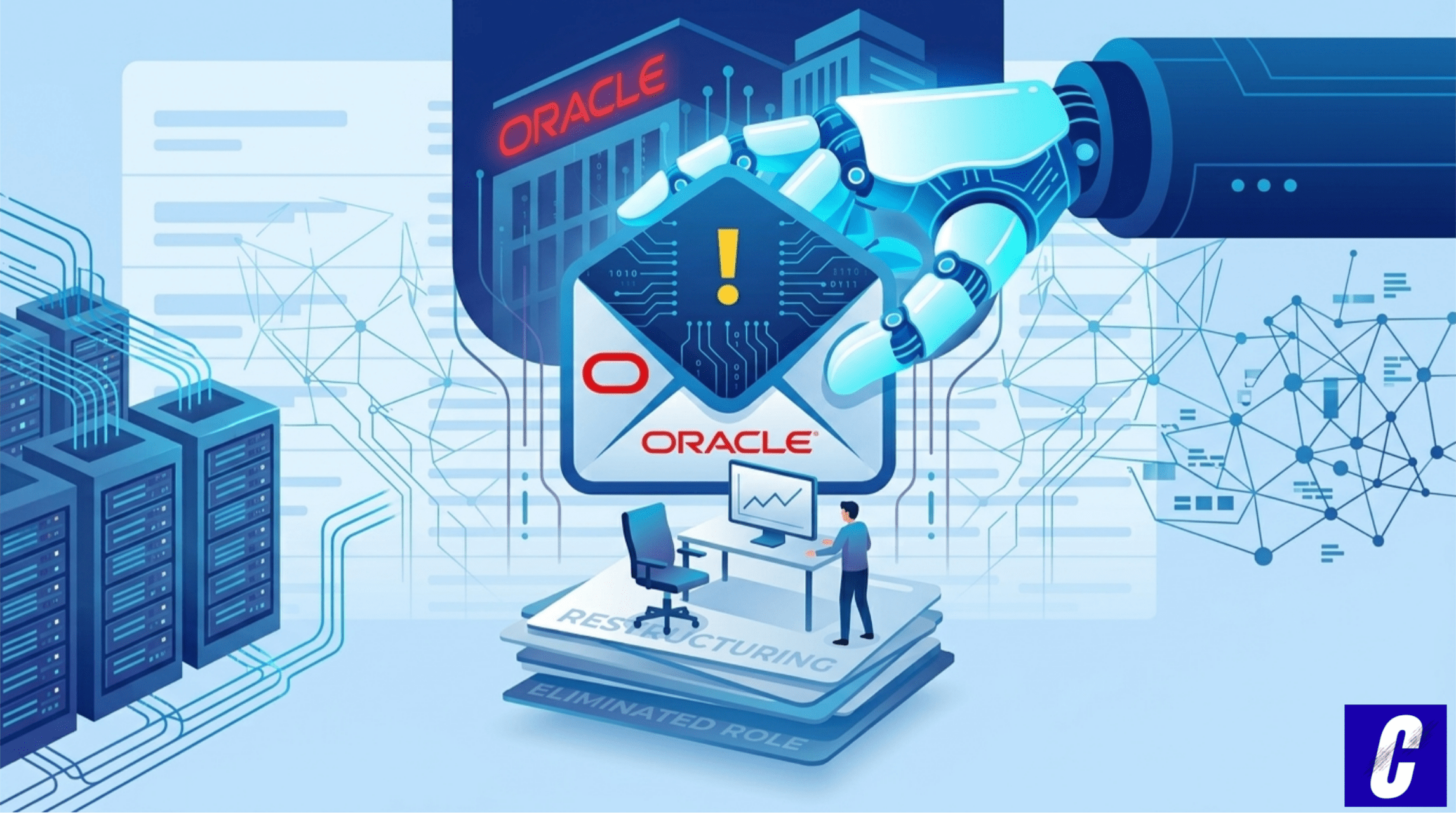
Imagine waking up, checking your email like any other day, and realizing you don’t have a job anymore. That’s exactly what happened to employees at Oracle Corporation. No meeting. No warning conversation. Just a message in their inbox telling them their role had been eliminated, effective immediately.
Layoffs are nothing new in the tech world. But the way this one happened—that’s what’s making people uncomfortable.
Not Just the Layoffs—The Way They Happened
Reports indicate that thousands of employees across different departments were affected in this wave. What stood out wasn’t just the scale, but the delivery.
The Timing
People received early morning emails—some as early as 6:00 AM—telling them their job was gone.
The Access
For many, access to company systems was cut off almost right away. One moment they were employees, the next they were locked out.
There’s something jarring about that kind of transition. Work usually feels stable, even when it’s not. You expect signs—performance talks, team changes, something. But an email like this skips all of that. It turns a major life event into something that feels… routine.
The Language That Says Nothing
If you look closely at these kinds of emails, they all sound the same. Phrases like “organizational changes” or “business restructuring” show up again and again. They sound official, but they don’t actually say much. They don’t explain why you were chosen, or what really led to the decision.
It’s careful language, likely drafted to meet legal requirements while minimizing corporate liability. But from the employee’s side, it feels distant—as if the message wasn’t written for a person, but for a process.
What’s Really Driving This
This isn’t random. Oracle is investing billions in AI infrastructure and expanding its data center capabilities to compete with giants like Microsoft and Amazon. That kind of shift costs a massive amount of capital, and companies often look for ways to cut expenses elsewhere.
Employees become part of that equation. It’s a tough reality, but it’s an honest one: companies are not just laying people off because they’re struggling. Sometimes they’re doing it because they’re changing direction—and they believe fewer people can do more work with better technology.
Why This Feels Different
People aren’t reacting this strongly just because of job losses. It’s the feeling of being reduced to a notification. Work is personal. Even if it’s “just a job,” you invest time, energy, and routine into it. You build relationships. You plan your life around it. So when it ends through a short email, it can feel like none of that mattered. That’s the part companies often underestimate. Efficiency might make sense on paper, but it doesn’t always translate well in real life.
Where Do We Draw the Line?
From a business point of view, sending emails is fast and consistent. It avoids complicated conversations and keeps everything controlled. But just because something is efficient doesn’t mean it’s right. A short meeting, a conversation with a manager, even a small moment of acknowledgment—that can change how someone experiences a layoff. It doesn’t fix the outcome, but it makes it feel less abrupt and less mechanical.
The Bigger Picture
This situation isn’t just about one company. It reflects a larger shift across the tech industry:
- Heavy investment in AI.
- Leaner, more automated teams.
- Faster, data-driven decisions.
That’s likely not going to change anytime soon. What can change, though, is how those decisions are communicated. Because while technology is moving forward, expectations around respect and dignity at work haven’t disappeared.
Final Thought
Getting laid off is hard. Getting laid off through an email makes it harder in a different way. It turns a human moment into a digital one. And maybe that’s the real issue here—not just that jobs are being cut, but that the way it’s happening feels increasingly impersonal. If this is what the future of work looks like, then the question isn’t just about job security anymore. It’s about whether there’s still room for basic human consideration in the process.